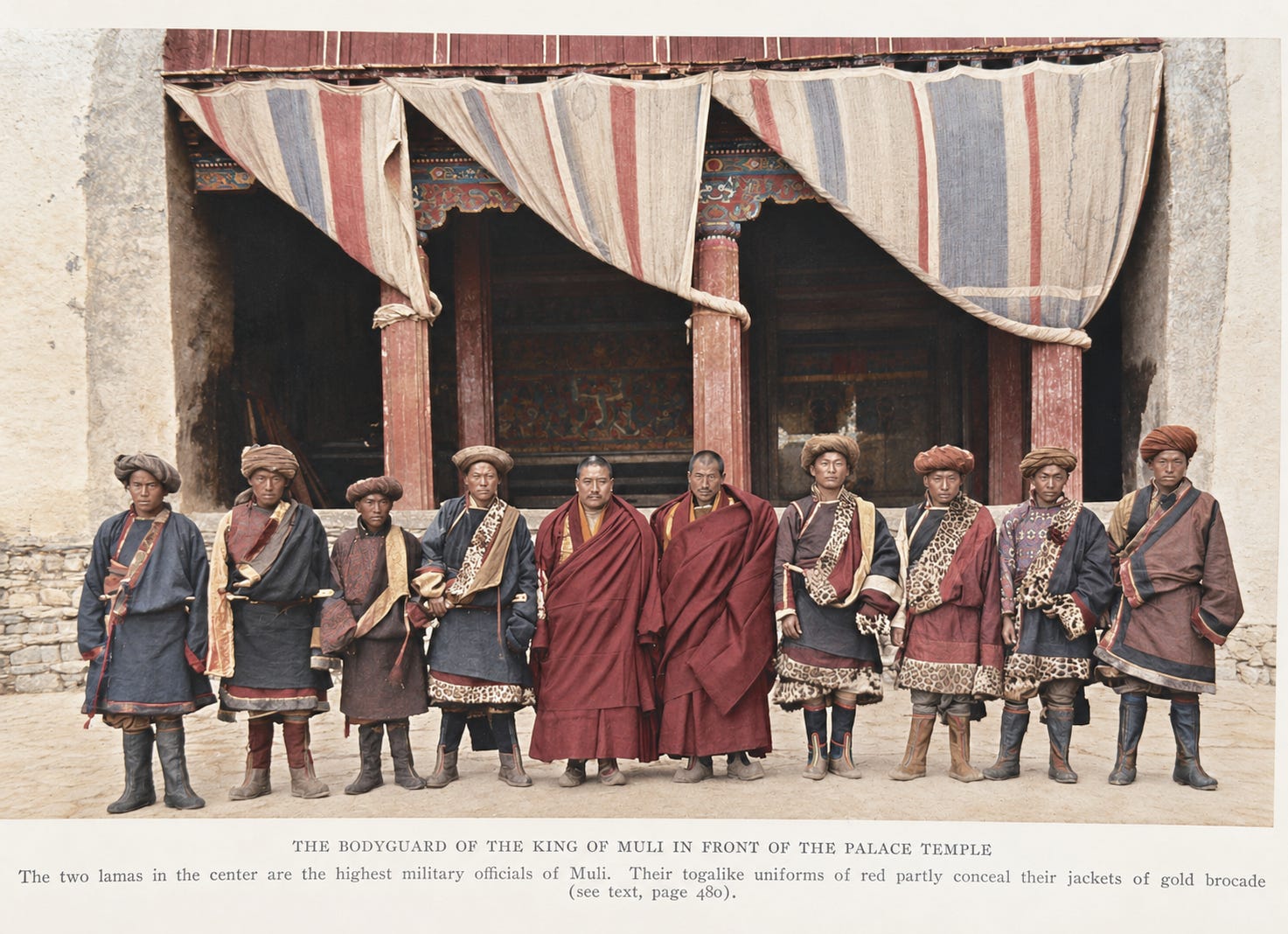
I’ve previously published a colourised photo version of Joseph Rock’s article in National Geographic of 1925 describing his first visit to Muli monastery near Lugu Lake.
Rock’s writing style was florid and he liked to portray dramatic scenes of arduous journeys through wild mountain terrain to discover lost kingdoms ruled by archaic princely Oriental rulers. It was all a bit Hollywood Indiana Jones, and his American readers lapped it up. Rock’s fantastical articles about mysterious lost monasteries and Tibetan mountain kingdoms were part of the inspiration for the ‘Shangri La’ concept of James Hilton’s Lost Horizon book and the later movie.
Until now I thought that Rock had been the only visitor to write in detail about Muli and take photographs of the place. But I’ve just discovered anthropologist and photographer Zhuang Xueben’s travel journals for his visit to Muli and Lugu Lake in 1939, just a decade after Rock’s most recent visit. They are published [in Chinese] in his out-of-print collected works Zhuang Xueben Quanji 庄学本全集 (Zhonghua Publishing 2009).
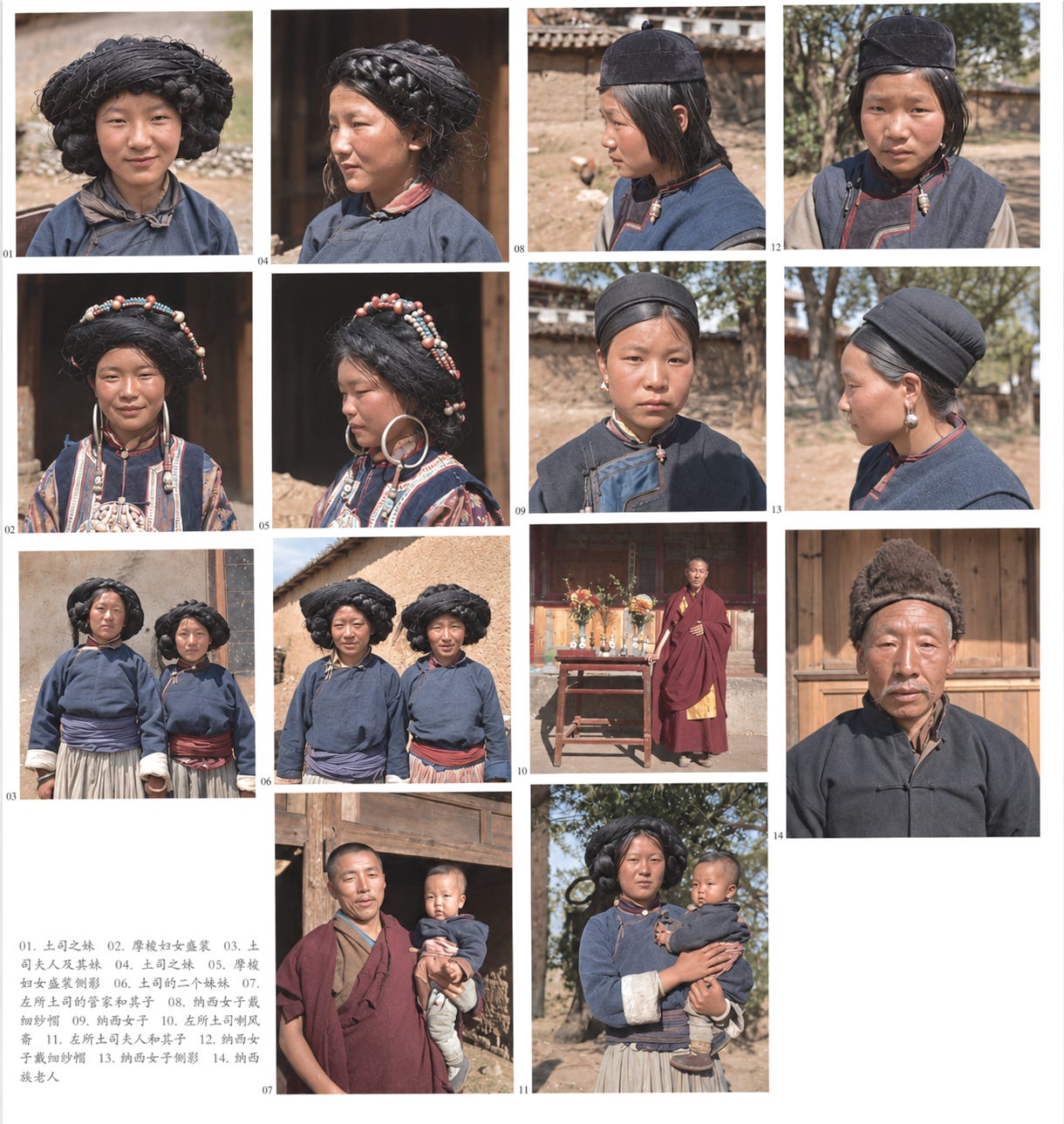
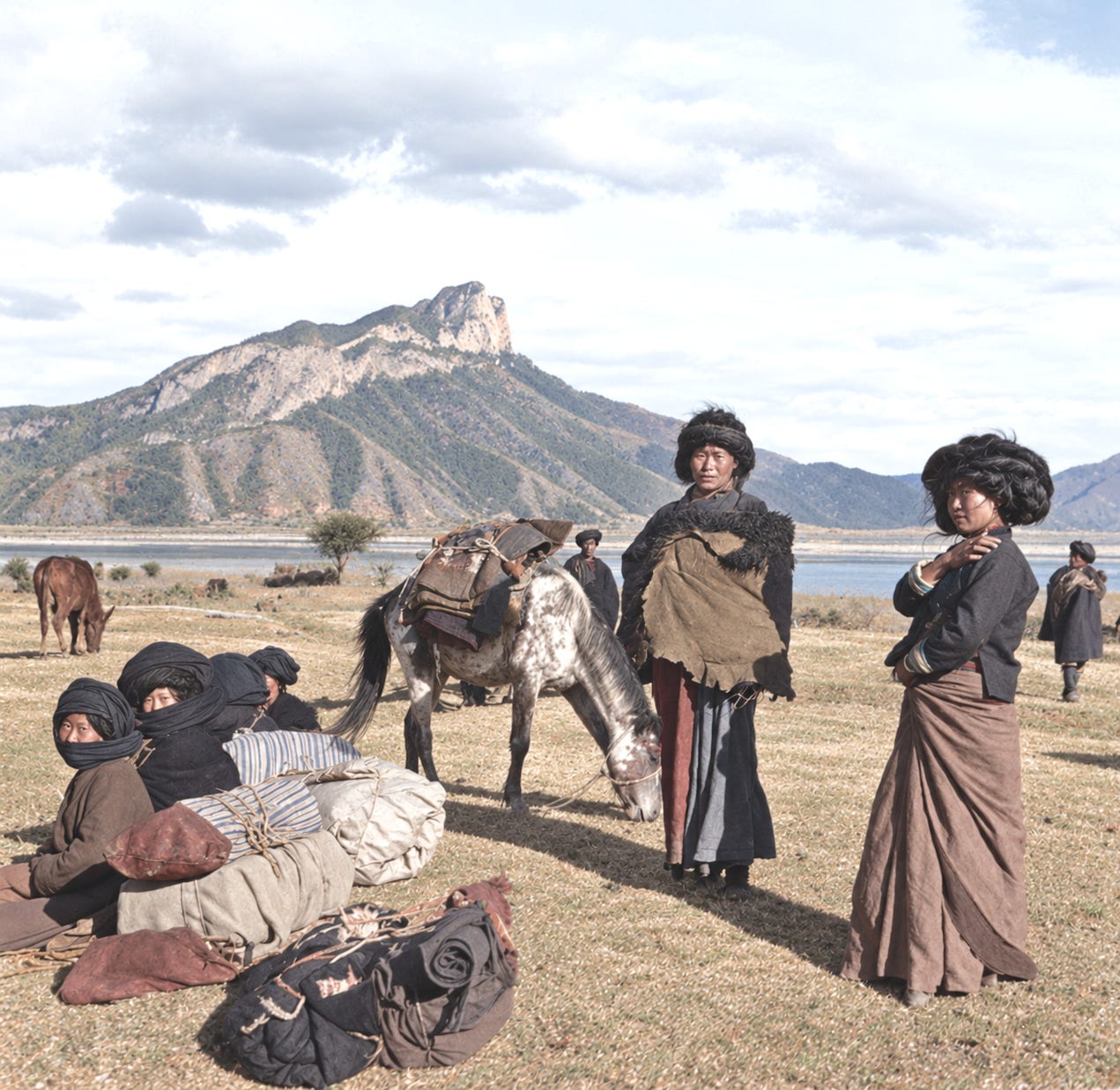
Zhuang took many photos of the monastery and local people. And his journals reveal a more prosaic and sober side of life in Muli. With his dispassionate anthropologist’s eye he describes the day to day realities of employment, taxes, family living arrangements, law and order - and power structures.
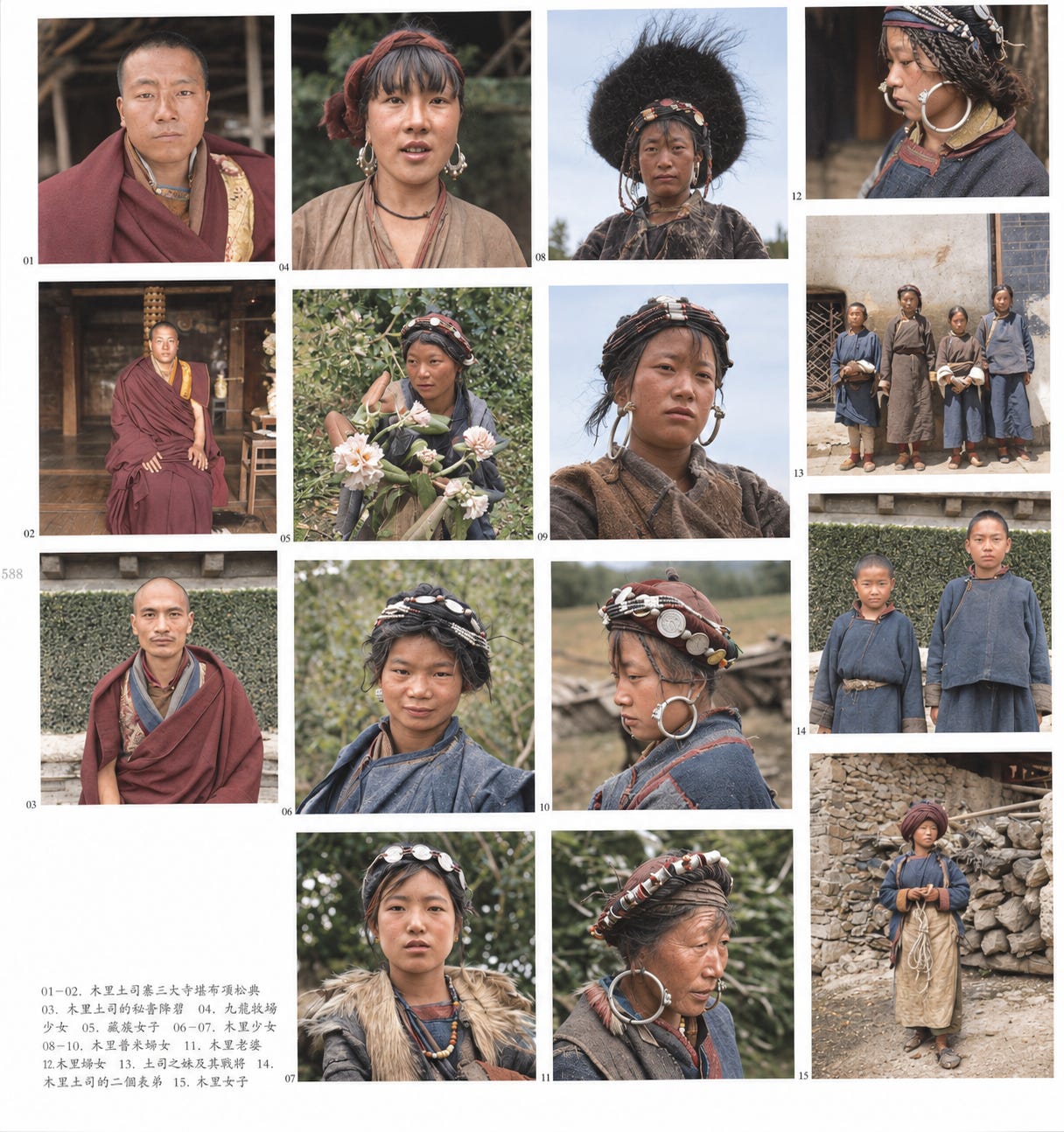
His journals show the mundane realities of what it was like to live as a subsistence farmer in a feudal lama ‘kingdom’. He talks about travel restrictions, being forced to work in a serf-like arrangement, and about what they ate and how the various local ‘minorities’ lived in clan villages - even the sexual transmitted diseases.
For the record, I’ll publish the raw notes here: they’re a bit messy and unedited (I used Google translate from the original Chinese so the names may be wrong). I’ve highlighted a few of the interesting observations.
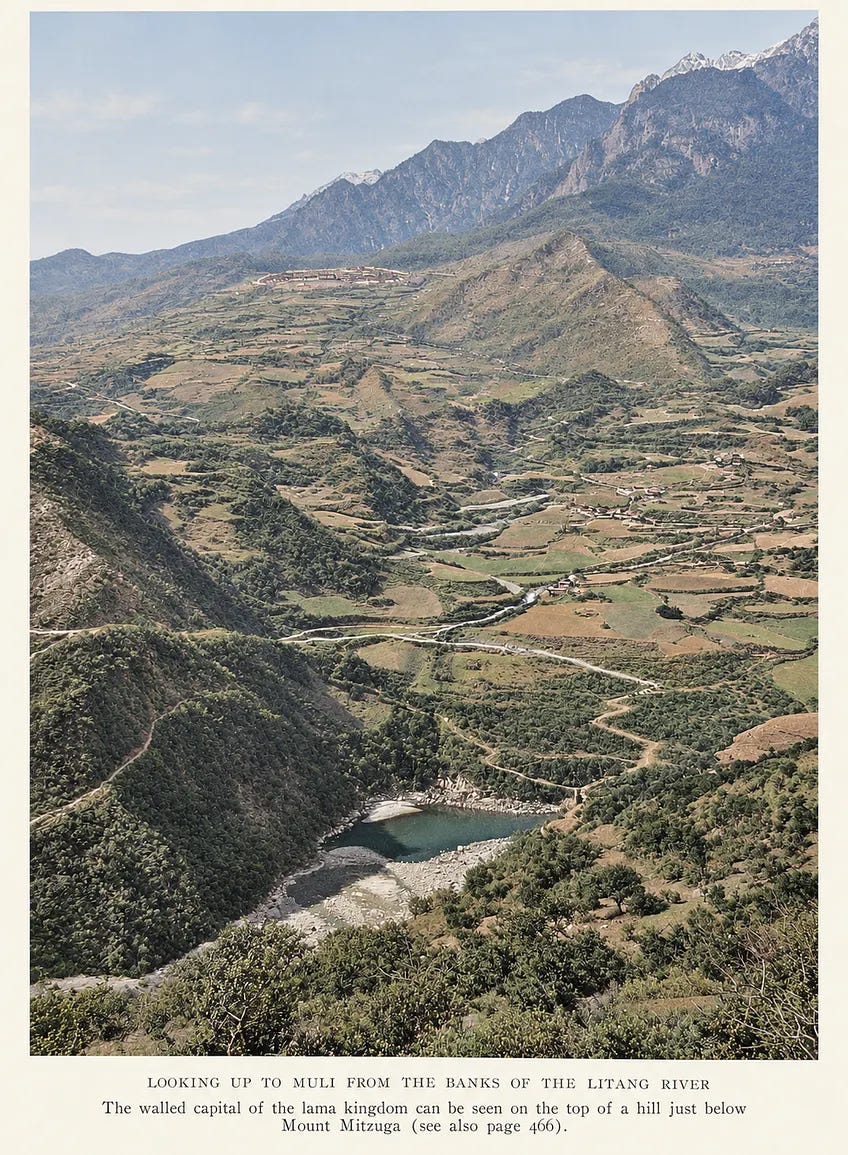
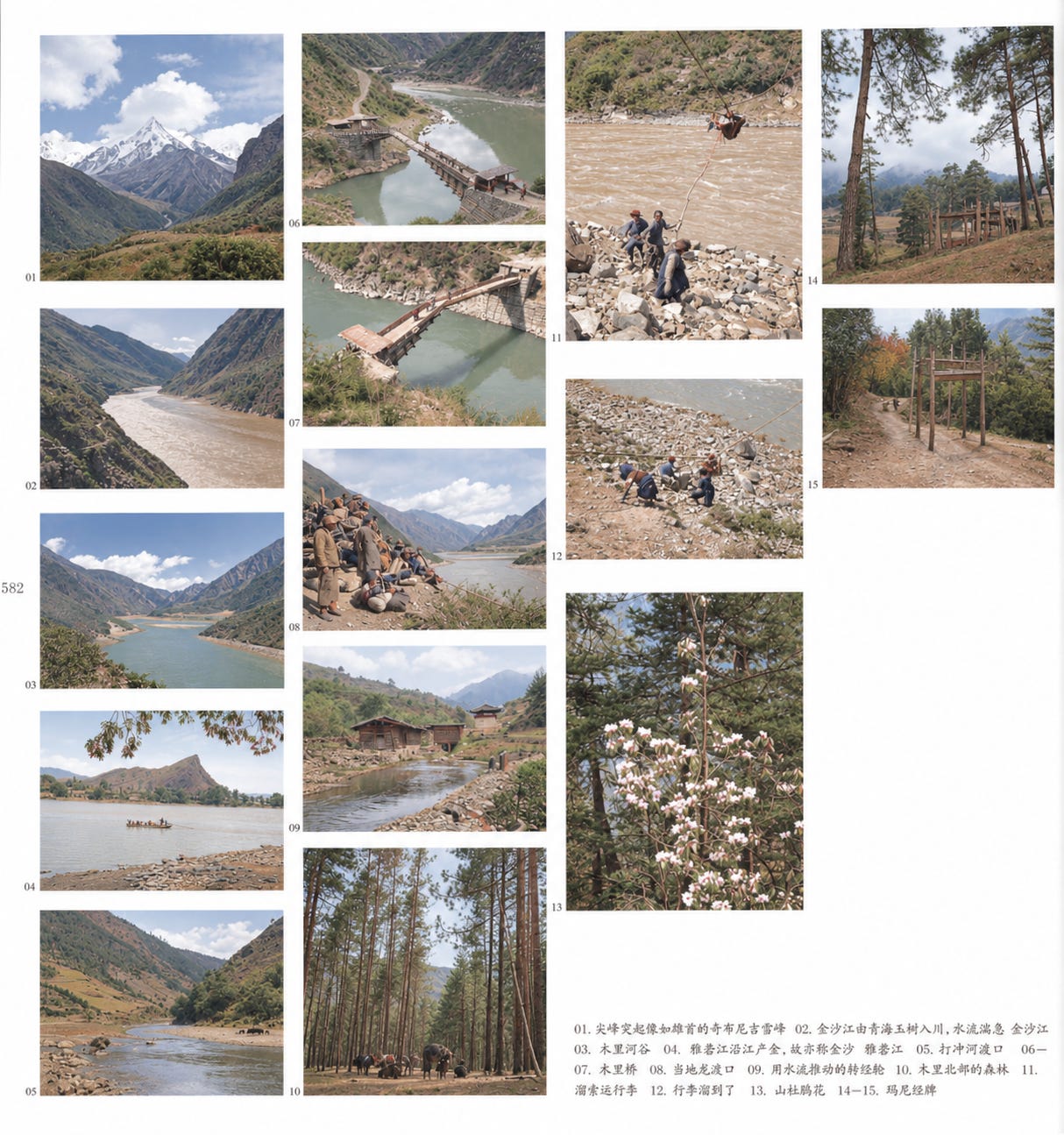
I’ve also posted a few of Rock’s photos to show areas where Zhuang didn’t provide images, and some of my own of the same places.
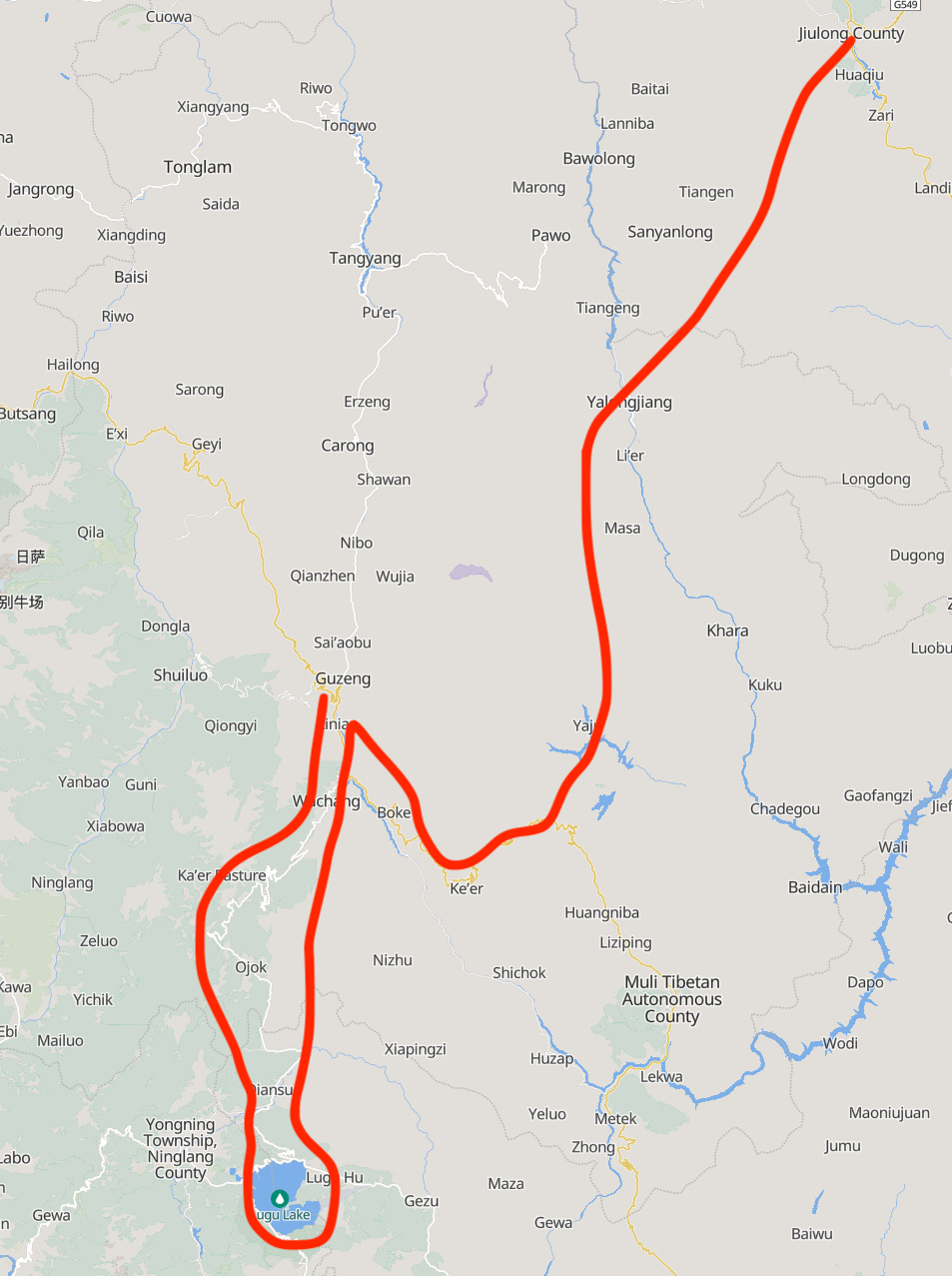
And here’s a bad map I created to show the journey from Muli monastery (‘Guzeng’) to Jiulong via a loop to Lugu Lake:
Zhuang Xueben’s travel diary Muli, Lugu Lake (March - July, 1939)
March 29, 11 degrees Centigrade, 2920 meters
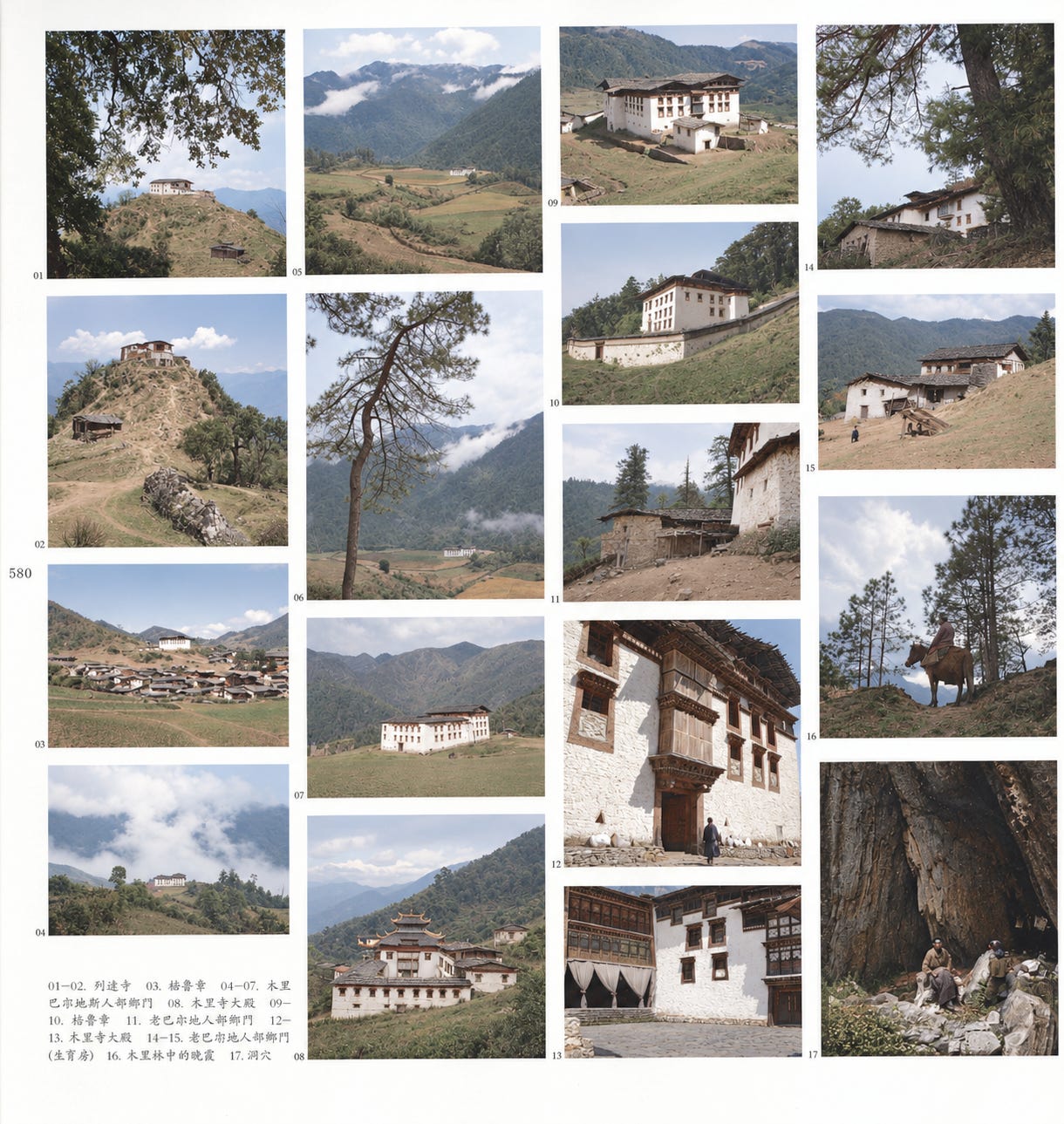
The journey begins with a downhill descent, lasting ten li before descending into a ravine. It then ascends another five li to Momo Gully, where a dozen or so Momo families live scattered on a steep slope. Here, we change to Wula, and then ascend again to a ridge at 2850 meters, where a dense pine forest with towering old trees lies. Fifteen li later, we reach Songlinwan, where several Yi families are clearing pine trees to cultivate for their children, leaving the pine timber discarded on the ground – a great pity. From there, we ascend a winding mountain ridge halfway up the slope, gradually finding signs of habitation. At the end of the ridge, a fortress suddenly rises, and the Liewa Temple is built atop it. Descending to the temple, we find that the official Gucha has already left, and no one is in charge. Furthermore, Muli is on the opposite bank of the river. This area is a strategic pass, so we must first attend to official business and obtain permission before entering. Therefore, we must wait here for several days.
March 30th 1939, Liewa
We awaited a reply from Muli. After breakfast, we followed the lama to the cave west of the temple. The cave was nestled in the rock wall west of the temple, shaded by trees. The entrance was visible after climbing a short distance. The cave was several dozen feet high, deep and flat, and the bottom was about a hundred paces away. To the left was another extremely deep, dark cave, but we did not venture into it as we had not brought any torches.
March 31st, Liewa
The area is inhabited by six ethnic groups: the Shuitian (lowland Yi), Zhongjia (Buyi), Miao, Moxi (Naxi), Xifan (Pumi), and Luoluo (highland Yi). Lamas forcibly conscript two out of every five able-bodied men, or one out of every three, and forbid them from going [to work?] to Tibet. Last year, a group of two to three hundred lamas attempting to enter Tibet were turned back, fearing they would not return. Now, very few who enter Tibet actually return.
April 1st
The Momo people typically cremate the dead and build hemp and willow towers for them; those who die of illness are buried in the ground. In the mythology of the Yi people, there is no single central figure of faith or hero who can rule the entire tribe; there must always be heroes resisting. Therefore, their tradition is that each group is its own leader. The killing of Puluoke was also influenced by this ideology.
April 2nd, Liewa
Before the Muli reply arrived, the [forced labour] porter escort and lamas had already been chosen by a vote in the monastery.
April 3rd
Mo Xi’s marriage here was arranged by her parents.
April 4th
In the afternoon, the lama said that Muli had replied and welcomed us in; they had decided to depart tomorrow.
April 5th, Mia
We rose at dawn this morning to prepare for our journey, escorted by Lama Losang from the monastery. After breakfast, we descended the slope, the pine forests blocking out the sky. After fifteen li, we reached the river. Along the way, villages were scattered on the flat slopes. A wooden boat was available on the river for timber transport.
The local people, officials, merchants, and Yi people do not use boats for transportation. There were seven households south of the river and five households north of it, who took turns rowing. They did not perform other corvée labor and were called “Momo”. There was a wooden bridge downstream from the ferry crossing; the river flowed from west to east (30 meters wide), but it was later washed away, and a new ferry crossing was built, still named “Daqiao” (Big Bridge). When we arrived, we launched our boats from the opposite bank. The boats were small and leaky. After crossing, there were boat sheds made of pine branches on the riverbank. We changed boatmen here and waited for half an hour.
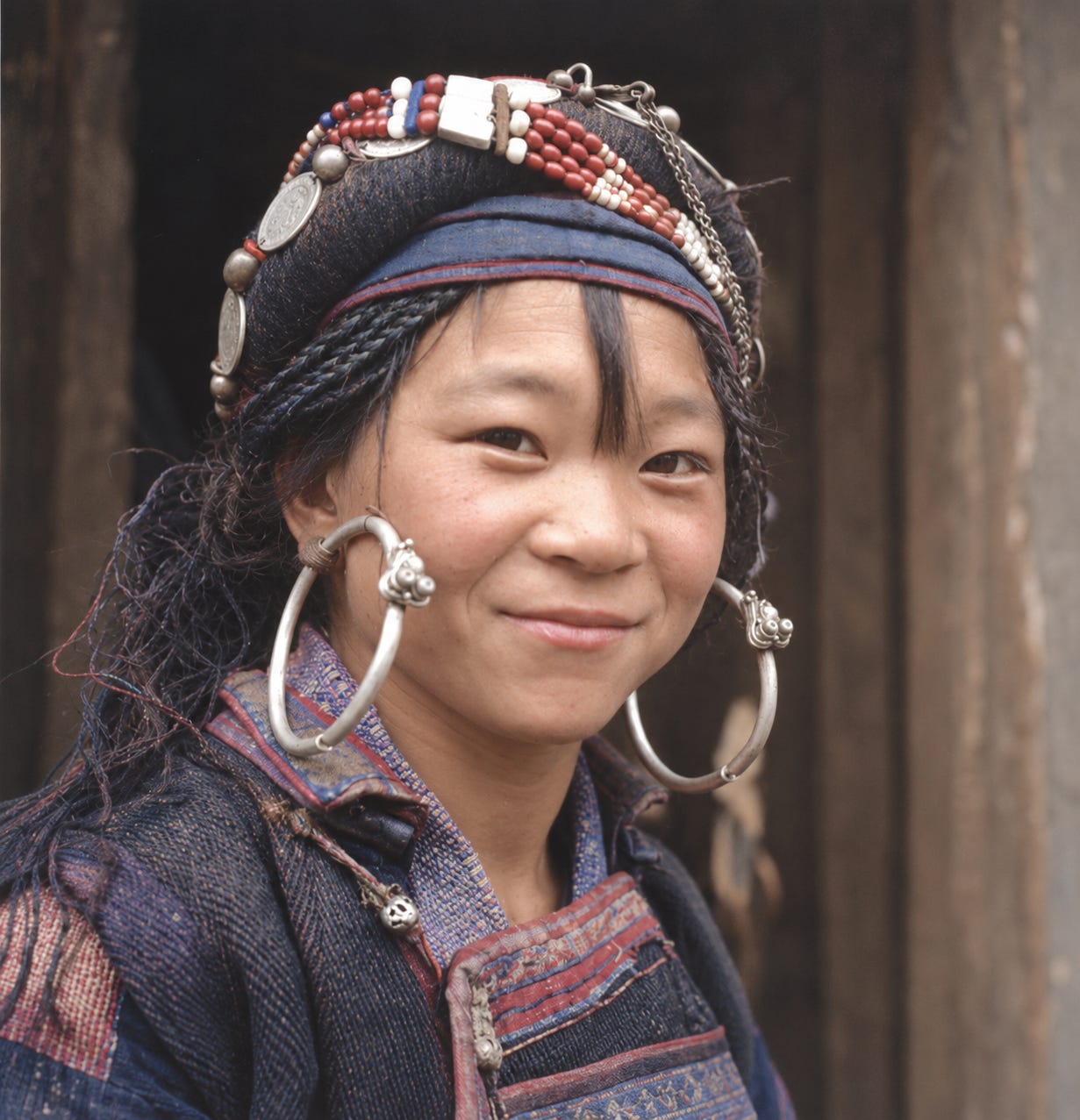
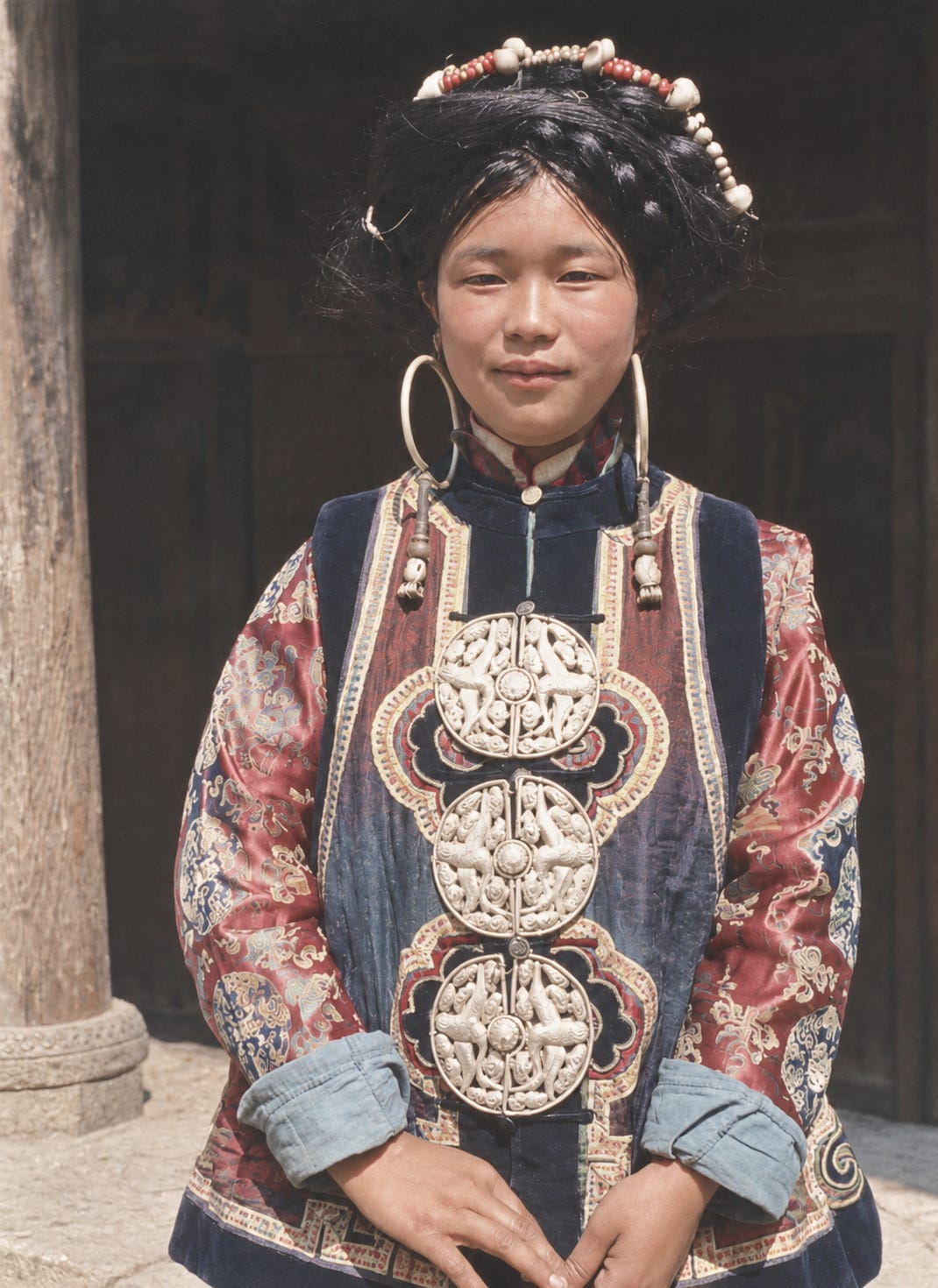
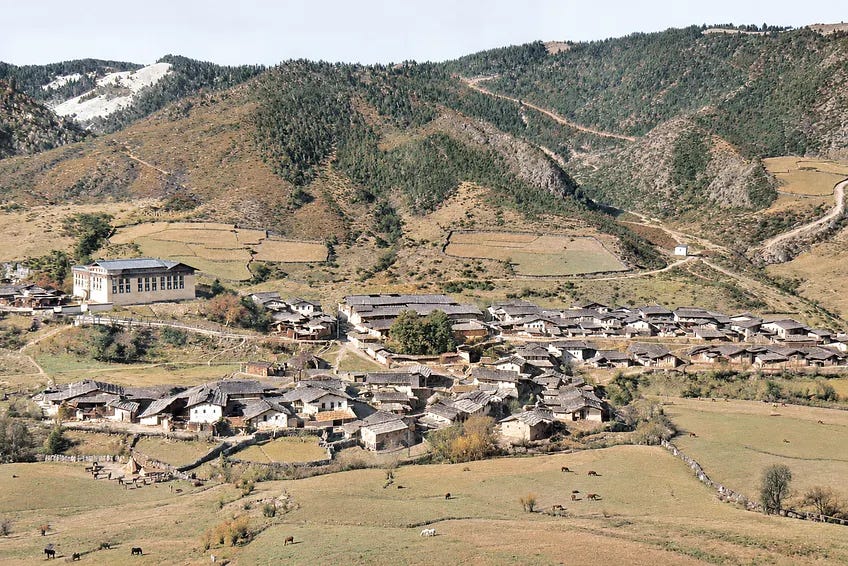
After the boatmen dropped us off, we set off westward, passing through Mutuo village where there were three Momo households. Their fields were by the river; the climate was warm, and they were harvesting wheat. After passing this point, we climbed the mountain. Halfway up the mountain, at Cigu, there were three or four Moxi households. We changed muleteers again at the cookhouse, where the cook served us tea. After passing this point, we climbed the mountain again, heading north down the ridge for about twenty li. Halfway up the mountain, we reached Miya, our lodging place for today. The villages here are sparsely populated. On this side of the river, the women here, especially the Xifan and Moxi (Naxi), often wear fine beads on their heads.
April 6th, Mia to Sanjia Village, 60 li.
After breakfast, we set off northwest, winding our way through the mountains. The area was mostly high mountains, densely forested with pine trees, sparsely populated, with only two or three houses in a village. Before reaching a village, the porters would call out to us, and sometimes our group would already be there. At most, the porters would arrive within an hour. Of the three villages, only two remained; one had already been extinct.
Miao Customs: The Wengbo Miao people consist of eleven families, also known as the Ganzhen Miao or Shushu Miao, but actually the Qingmiao. Four generations of the Yang family and three generations of the Wang family have come here.
Marriage is typically at age eleven or twelve. The betrothal gifts include one or two pieces of cloth, a pair of cattle, a pair of pigs, a jar of wine, and thirteen taels of silver. After the betrothal gifts are presented, the bride enters the family home, either on horseback or on foot, her face veiled. She returns to her parents’ home three days later and then lives with them. Marriage is largely free; children find their own spouses at eleven or twelve, using the lusheng (a reed pipe instrument) to court. If both parties agree, a betrothal is arranged, hence the prevalence of consanguineous marriages; only those arranged by parents have distant relatives.
Funerals are conducted in coffins and burial. Ancestors are enshrined in the home, commonly called “Old Man Bodhisattvas.” The Kulu Miao people comprise over one hundred households, referred to by the Miao people as Möngēlo.
Granaries were established in Wengbo and Kulu, each staffed with a lama official who was replaced every three years. The granaries stored grain from the nearby people three times a year: once in February, once in July, and once in September, totalling over four hundred *he* (a unit of dry measure), each *he* containing one *dou* and two *sheng* (another unit of dry measure). Wheat, barley, and buckwheat were transported to the temple to feed the monks, but corn was not available. However, the corn stored in the granaries was lent to the people, with each *he* returning one *he* and seven or eight *sheng* (another unit of dry measure).
Grain tax: Minji did not have this heavy burden before, but recently the annual burden has been seventy or eighty taels, and the people are unable to make ends meet. Corvée labor is also required.
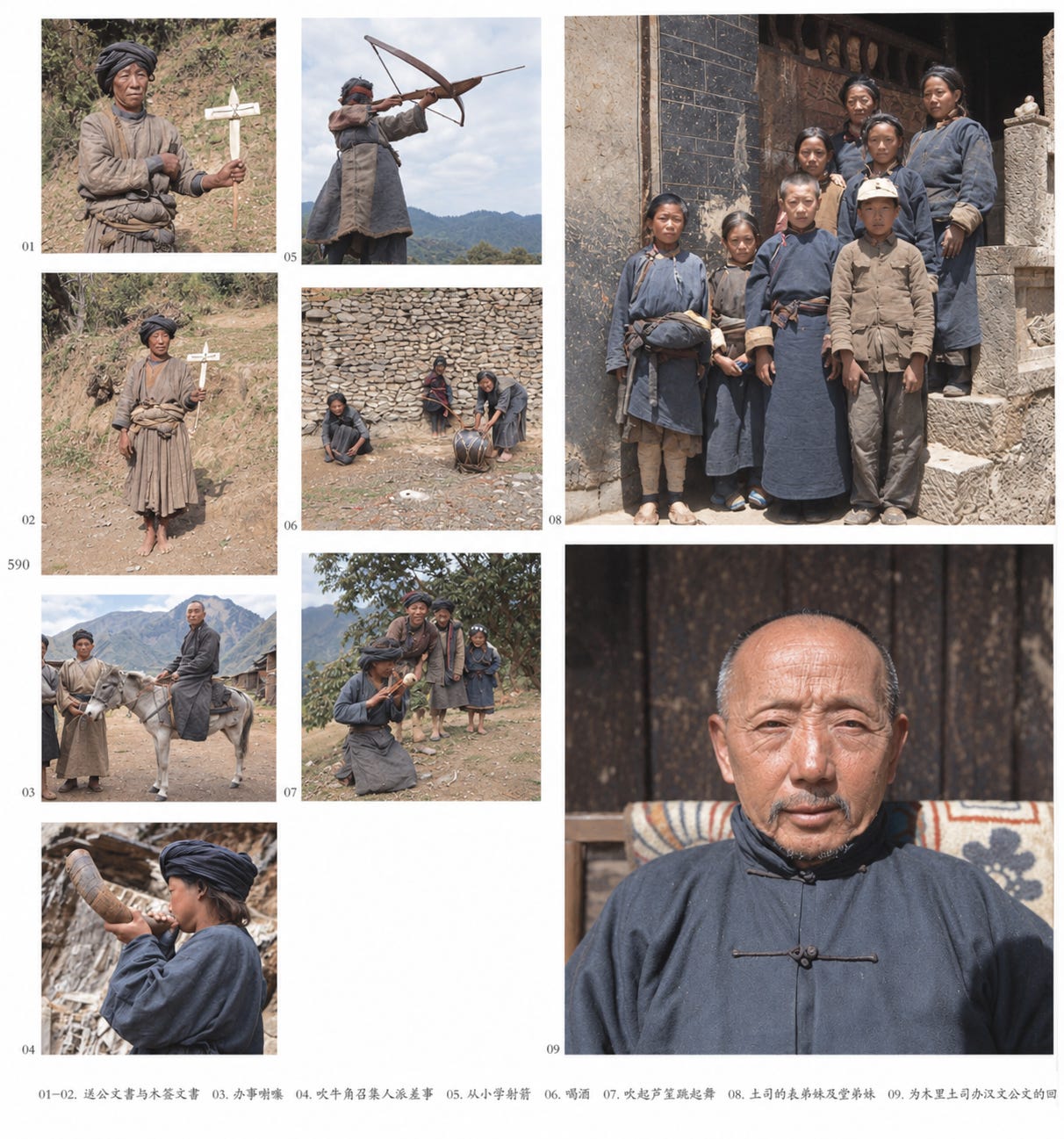
April 7th, Sanjia Village
I got up early and passed through Sanjia Village, crossed a ridge to Benggu. There were one or two Han families there, with many children, most of whom were born with congenital defects. From Benggu, I crossed three not-so-high ridges down to the riverbank, then climbed halfway up the slope to reach Ka. Here, it was difficult to urge the porters to hurry; it took two or three hours to get three of them. I went first, crossed the Shaoxiang Ridge, and then crossed it sideways to reach Shigu. It was already dusk. The pack animal behind me hadn’t come for a long time. There was no moonlight, and the road was difficult to travel. I sent the owner of the house here with a torch to look for him, but he returned without finding him. Since it was quiet here, I thought nothing bad had happened, so I went to sleep. [There were] three Bo Yi families.
April 8th Shili
We set off early this morning on our journey westward. Lama Guo and his porters rested in a cave last night after dark, and only arrived this morning.
We changed muleteers along the way, and from the rocky outcrop, we could see Muli monastery halfway up the mountain across the river. Today, considering how late it was yesterday, we decided not to rush to Tuolige and rested around 3 pm.
The local Bo people wear skirts, and their attire is not much different from that of the Pumi Tibetans. When sending official business, they write cross-shaped letters on a pointed wooden piece and deliver them from village to village.
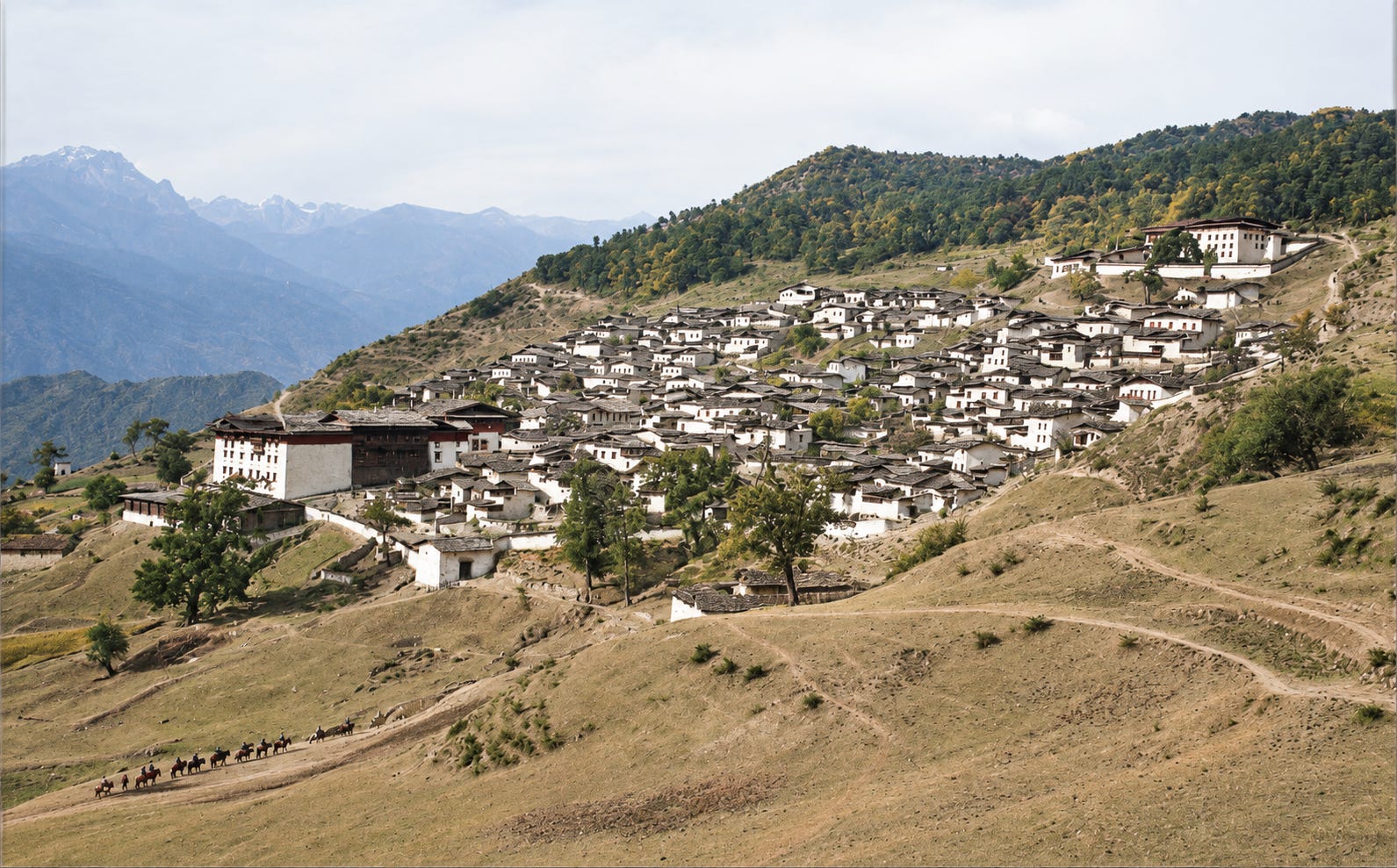
April 9th
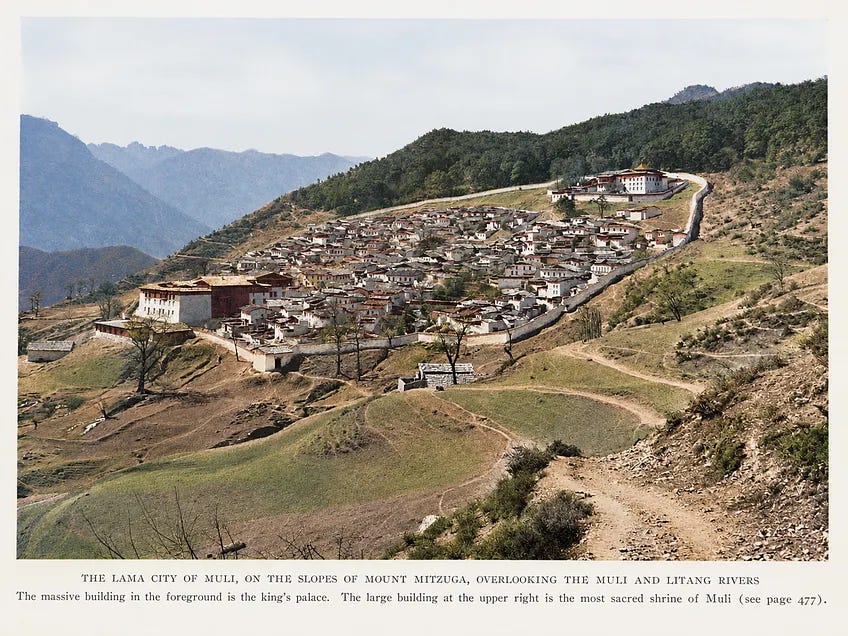
Sunny. Two horses arrived early, and the rest were carried by others. Seeing their hardship, I gave my own horse to carry the luggage along the way. We went downhill for ten li to a bridge, where a guard waited to collect a toll upon crossing. We then climbed about twenty li to reach Muli monastery, nestled at the foot of a cliff, its walls marked with whitewash.
Upon entering the [Muli monastery] gate, a Han Chinese secretary named Tian and a monk named Guyi greeted us. Seeing my short clothes and straw sandals, they mistook me for a servant and asked if the visiting official was behind me. I couldn’t help but laugh. At the temple, they first showed me a monk’s hut to rest in. The Muli chieftain [king] was not receiving guests that day. I received a small amount of tsampa and rice. In the evening, a steward came to arrange a meeting with the Muli king the next day.
April 10
Yesterday’s rice and tsampa were all gone, and I couldn’t buy any more at the shops, which was quite embarrassing. A short while later, the Muli chieftain sent his advisor, Master Tian, to greet me. I prepared two gifts and went to the yamen [magistrates office].
I was first led to a Han Chinese reception room, then invited to see the chieftain, whom I called the Commander, in a spacious but dimly lit room. The Muli king was twenty-three years old, dark-skinned and imposing. He exchanged a few words and left; he didn’t understand Chinese, so the gatekeeper translated for him. Next, I saw the Buddha in the next room, also only in his early twenties, tall and stout, just like him. I greeted him and left.
Breakfast was provided, and upon my return, a tray of rice and tsampa were brought back, along with meat, tea, and ghee. The young official escorting him wanted to leave, and I gave him a piece of cloth as a gift. This morning, Lama Guo was unruly, and I had to drive him away.
April 11
I was invited to breakfast. [The Muli king] wanted to learn photography, so the footman took out a camera and asked me to give him instructions. I then wrote down my advice on six sheets of paper.
April 12
Because [the Muli king] was illiterate in Chinese and could not speak Chinese, the writings were translated twice by his advisor and footman, inevitably resulting in errors. Therefore, he often asked someone to come and ask for his advice.
April 13th Rain
The servant enthusiastically translated the photographic method into Tibetan [for the Muli king]. I intend to go to Zuosuo tomorrow, but they’ll stay for two or three more days. After dinner, we went to the traders’ houses. They collect between five and six dozen taels of loose gold and about ten catties of musk; I have no other possessions. There are five or six traders from Shaanxi, more than ten from Yunnan, and one from Sichuan, the rest are water carriers. All the traders are temporary outfits, trying to break even. One hundred taels of gold and grain can buy about ten guns.
April 14th, rain in Muli
Inside the Muli monastery is a large Buddha statue, about two zhang tall, which is Maitreya Buddha. Below it is a small stone Buddha, about two chi tall, which is said to have been a gift from the descendants of the Lijiang Wood King. It has three eyes and two hands, with eyes also in its palms.
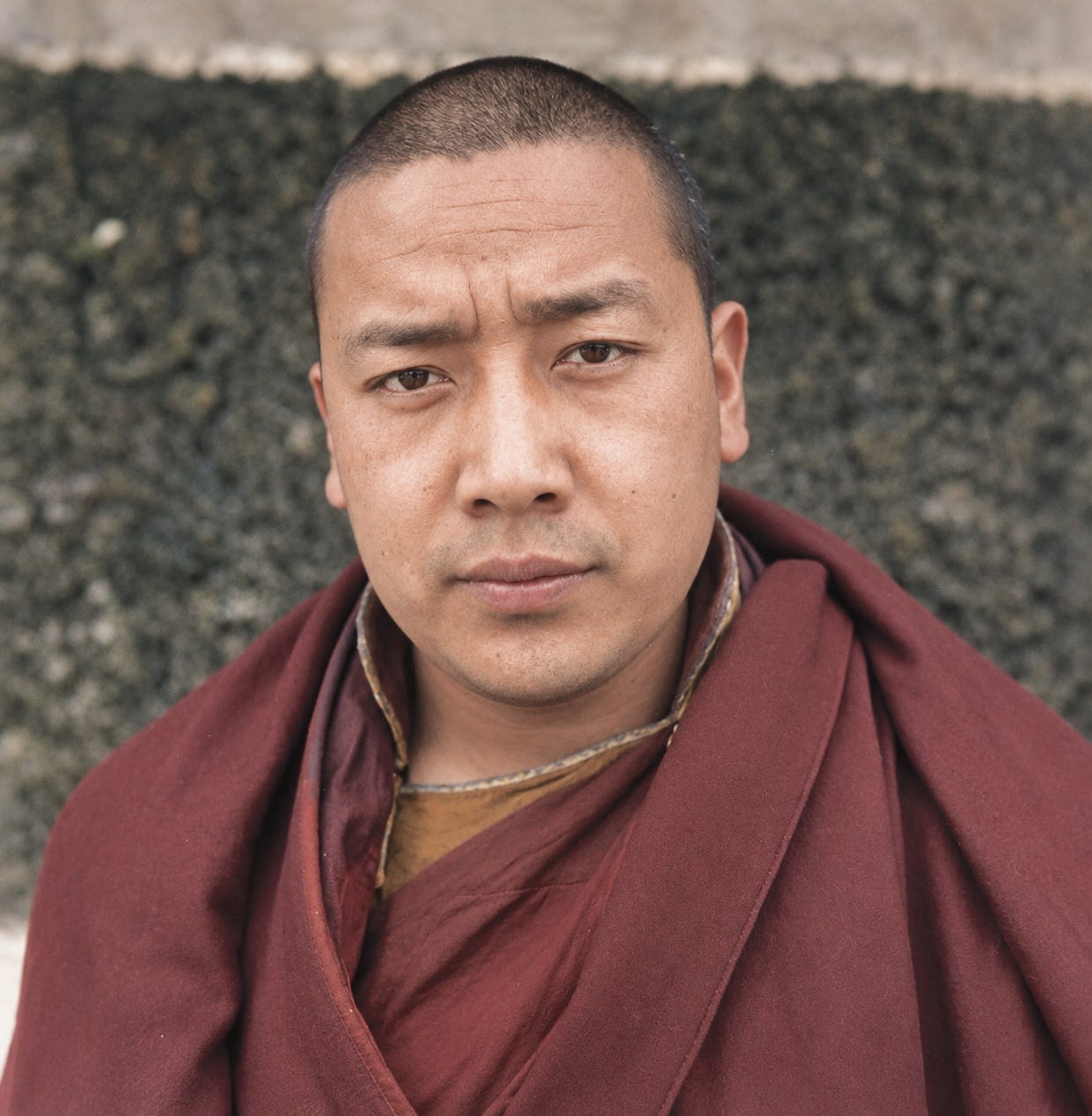
When attending services, the lamas are controlled by the monastery [Living Buddha]; when leaving the monastery, they are under the authority of the Muli chieftain [king]. Lamas are allowed to take leave to go home once every three years; otherwise, they are not permitted to do so.
April 15th, Muli
In the morning, The Living Buddha and the Muli king [chieftain] were invited to take a photo. The king said that they could take a photo next time they came. The Living Buddha agreed to take a photo upstairs and I also took photos of Zhang Daji’s two sons. The younger son will inherit the Muli chieftain’s position and is currently ten years old.
The only advantage of the Yi people is their rapid population growth. First, they separate their families after marriage; second, they bring their relatives into the family, and then their relatives bring their relatives into the family, creating a tight chain; third, they sell their children to provide them with homes and houses.
April 16th, Muli to Xilin, 20 li.
We departed from Muli in the morning for Yongning. After breakfast, we came from Wula. We went downhill for fourteen li to Wula, and then uphill for another six li to reach Xilin. Since we will be crossing the mountains tomorrow, we will rest here today.
The lamas who came to see us off were accompanied by the local people. If they arrived late, the locals would be whipped severely, displaying excessive authority.
The local population consists of eight Han Chinese households, several Miao households, and several households each of the Western Tibetan (Pumi) and Miao people. The local people pay a gold tax of one qian and one fen. The gold is mined from the Muli River and the high mountains; the high mountain gold is found in the grass, and it is said that it can be found by digging several feet deep.
Gold mining: Xilin is on a high slope. Above Lilang, two stations away from Muli, gold was found in the water. After the chieftain’s family closed the sluice gate...
The grain tax in Kulu is sometimes as high as three qian. Pine ash is also a type of grain tax. Zhang Daji’s eldest son, Luosang, married the chieftain’s sister. Zhaxie is fifteen and unmarried, while the younger Sangyequ is ten years old.
April 17th
Thirty li to the mountain peak, 4120 meters, then fifty li downhill west to Wujiao, 3190 meters.
Before dawn, they rose up in a great clamour. After breakfast and tea, as the east gradually brightened, we set off. The caravan ascended Xining Mountain, a winding ascent. Initially, the porters horse ran away, and the escorting lama immediately began whipping it wildly. The [forced labour] corvee porters dared not resist in the slightest. Such was the lama’s tyranny; the suffering of the people was even more unspeakable.
We encountered two groups of merchants on the way up the mountain. The summit was covered in snow, making the journey quite arduous. The mountain was as high as the Daxiang Ridge, and it took a long time to reach it; human habitation was rare. The summit was surrounded by rugged cliffs, covered in snow like a screen. There was a wall of jagged rocks at the summit, as if for defense.
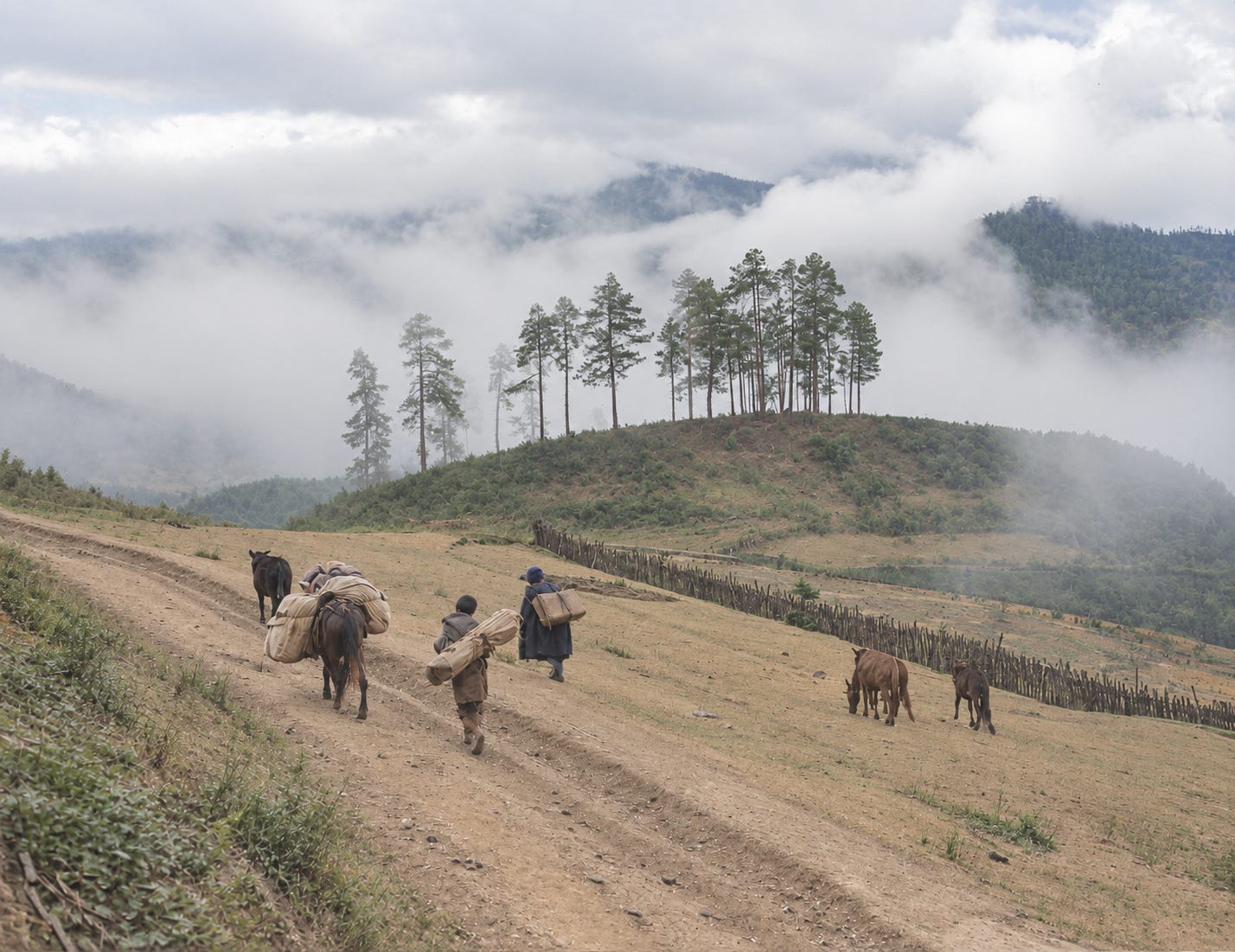
Descending from there, the snow melted, making the path slippery. The forest stretched endlessly, mostly ancient primary forest, with trunks two or three spans in circumference and over ten zhang high. After descending twenty li, we brewed tea on a snow-covered slope. After drinking it, we walked another ten li to a large meadow, about one li wide, with the remains of a lama’s hermitage nearby. The elevation here was 3500 meters. Another twenty li led to a bridge, where a main road now lay.
Two paths lead to Zuoqian Suo without crossing the bridge; crossing the bridge leads to Yongning Main Road, where the elevation is 3100 meters. Then, cross the 579-meter slope, where the ruins of the old Wujiao government office are located, covering approximately two-thirds of a square mile. Crossing the ravine and ascending slightly, one reaches Wujiao. The entire route up to this point is forested, and occasionally one encounters Yi people along the way. There are ten households here, and Yi people live on the opposite slope.
April 18
From Lijiazui (20 li), 3050 meters, travel southwest, cross a small slope, then another small slope to the Yunnan border, 3040 meters. Ten li to the gorge mouth, named Wulaping, 3020 meters. This area is a flat plain, three li wide. Ten li to Baixiangshu, with about ten households, 2970 meters. Arriving at Yongning at dusk, 292 meters high.
Xifan (Pumi people): Their influence once extended to Xichang. In addition to the White Pagoda Temple, there is also a Stone Pagoda Street in Xichang City, and its remains can be found.
April 19
Yongning 2900m, C16 degrees.
Origin of the Muli Tusi (chieftain): A Mongolian woman, working as a beggar, gave birth to a small child under a large tree in the Ba’er region. The child was very clever and quick-witted. The Muli Living Buddha saw the child, took a liking to him, and adopted him. As the child grew up, he became quite capable and diligently served the Living Buddha. Later, the Living Buddha went to the capital to pay homage to the emperor and was granted the title of Tusi. The Living Buddha then bestowed the title of Tusi upon this person, who inherited it and later became a Khenpo (abbot) while also serving as Tusi.
Maternal line: Moxi gave birth to a son who became a lama. Of the three, two were sent to the temple. The daughters stayed at home and did not separate from the family. The sons separated from the family only after they got married, but this was very rare.
Adulthood: A girl is considered an adult at the age of thirteen when she wears a skirt.
Cremation: Cremation is carried out on the evening of the death of a person.
Lama: Lamas in the monastery live at home except when they attend assemblies in the main hall.
April 20, Yongning
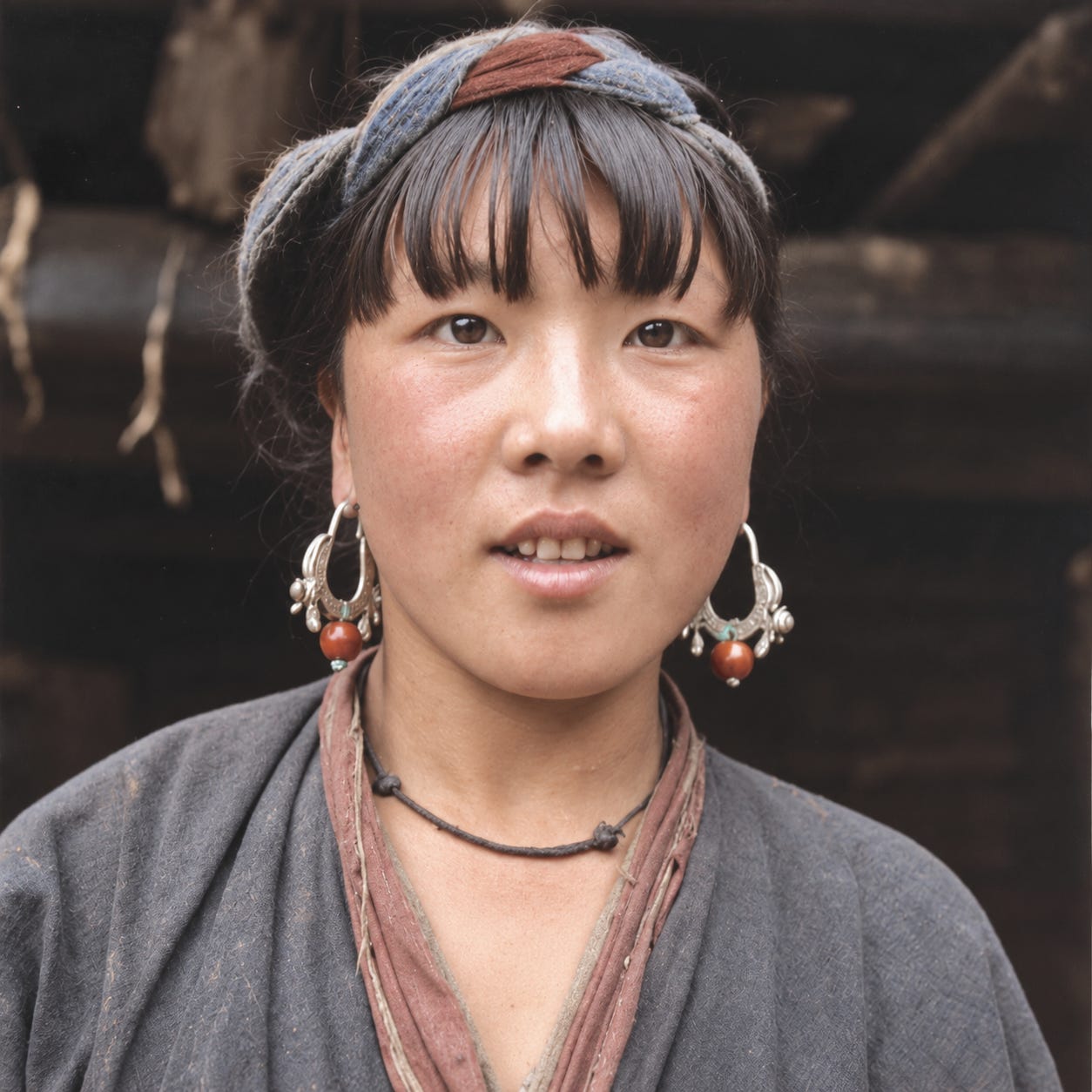
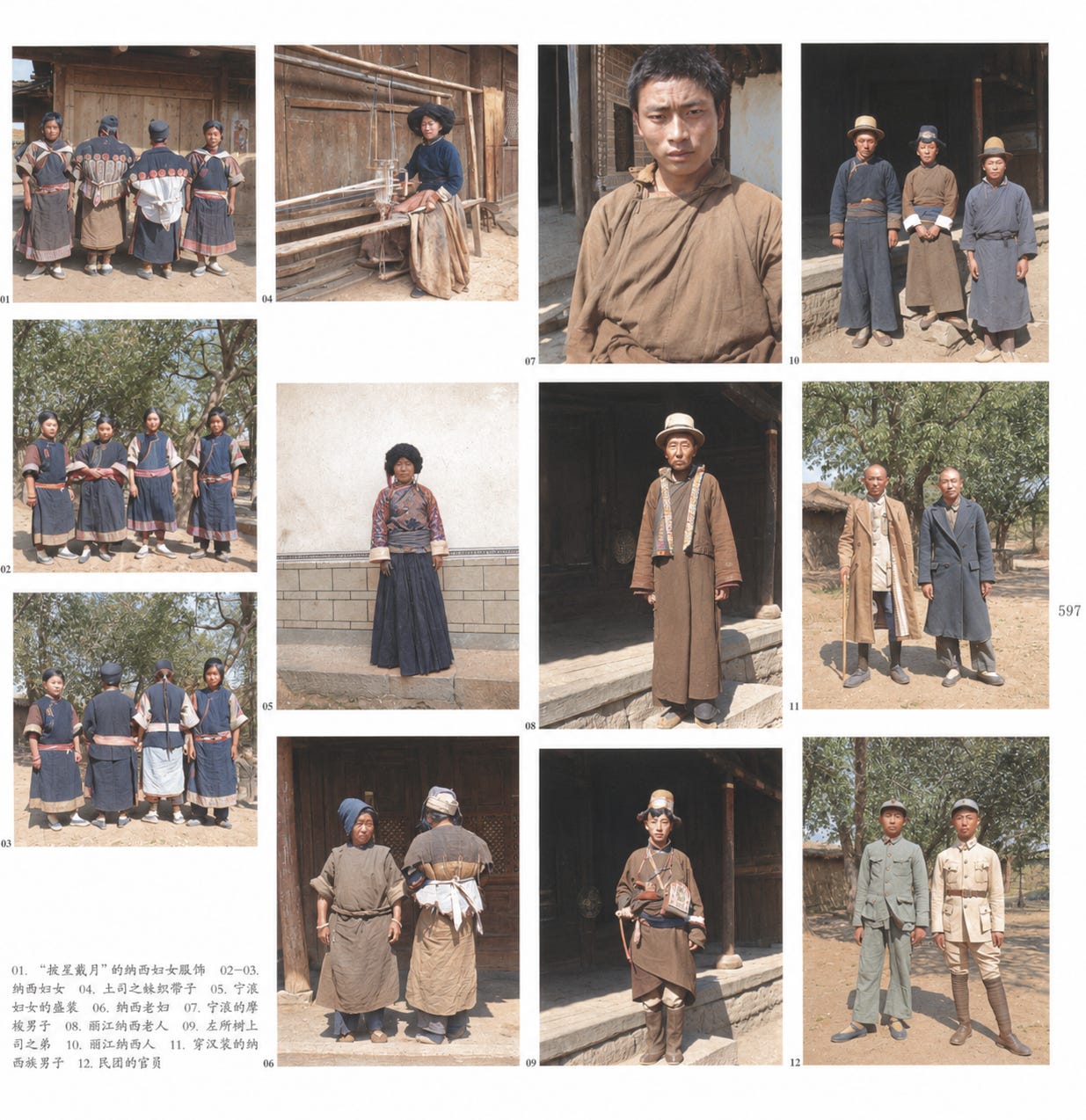
The Han Chinese in Yongning mostly follow the customs of Lijiang. Lijiang women’s attire is quite distinctive, likely an evolution of the Moxi style. To this day, their language remains the same as that of the Yongning Moxi. Women wear round hats, and young girls called “Pan Ji Mei” wear melon-shaped hats and have long braids.
Yongning Commerce: Imported salt and cloth, exported medicinal herbs and hides, etc., with extremely small output. Commerce began to become slightly more active after Longda set up a factory (Limin Company, which was established last year).
Gold factory: In the past few months, the gold production ranged from four or five taels to six or seven taels. Last December, the factory had a peak production period, with the output reaching fifty or sixty taels that month. Therefore, the factory has not yet lost money. There are currently three or four hundred workers.
April 21st
Yongning is 2870 meters altitude. We went to the Tusi Yamen (chieftain’s office) east of Kaiji Bridge to take photos.
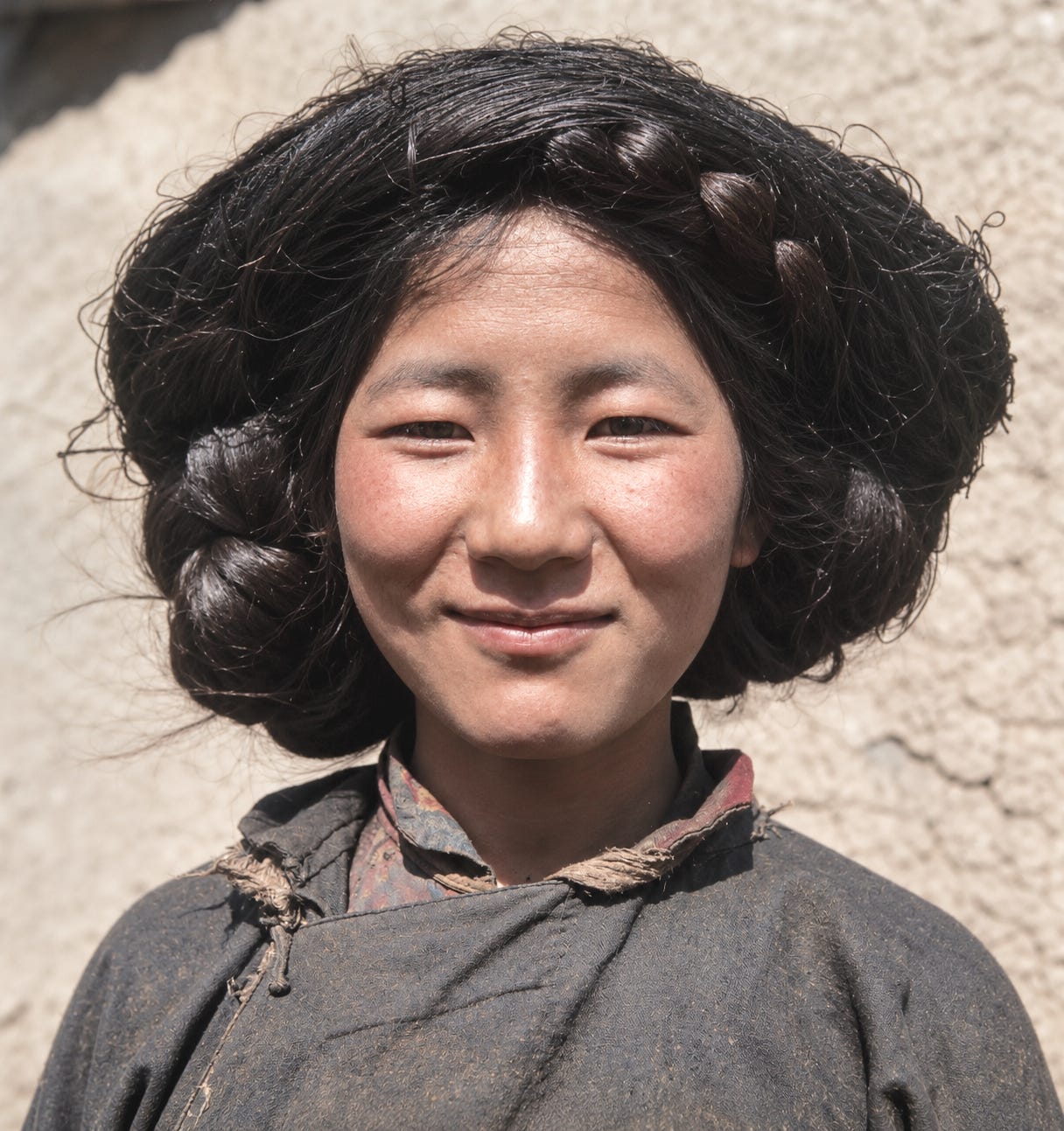
When a girl comes of age: an auspicious day is chosen for her to put on her skirt, and a relative whose zodiac sign is incompatible with hers is selected to replace the skirt. Hair is styled differently; minors wear a single braid, while adults wear two braids coiled on their heads.
Cremation: Like the earthen people, the ashes are placed in an iron pot at the bottom during cremation. After the cremation is complete, the ashes are picked out of the pot, put into a cloth bag, and buried in a high mountain.
Tusi: The Yongning Tusi came from Mongolia during the Yuan Dynasty and settled here.
April 22nd, Yongning to Lugu Lake
After breakfast, we set off, crossing Kaiji Bridge and heading southeast, passing the Tusi Yamen (chieftain’s office), gradually entering a mountain valley. At the end of the valley was a lake, shaped like the bottom of a pot; the water had dried up and turned into fields. To the right, on the slope, was Zhudi Village. This area was about fifteen li in circumference and belonged to Yongning. Along the way, a female porter talked animatedly about her many friends, showing no shame, and said that it was shameful for a woman to have a boyfriend without wearing a skirt.
After changing porters, I went ahead for about five li, crossing a 50-meter-high slope, and saw a corner of [Lugu] lake, stretching out flat in the distance. Two islands to the north jutted into the sea, like turtles drinking water. I took photos and continued southward, with pine forests and camellias lining the way, the northern islands hidden even more in the shade of the pines, and the sea becoming increasingly wide.
After turning down the slope, Yongning Xiehe Island appeared in the southeast corner of the sea, its white walls partially obscured by the turquoise water, making it appear even more ethereal. The entire panorama of the sea was unobstructed from the sloping hillside.
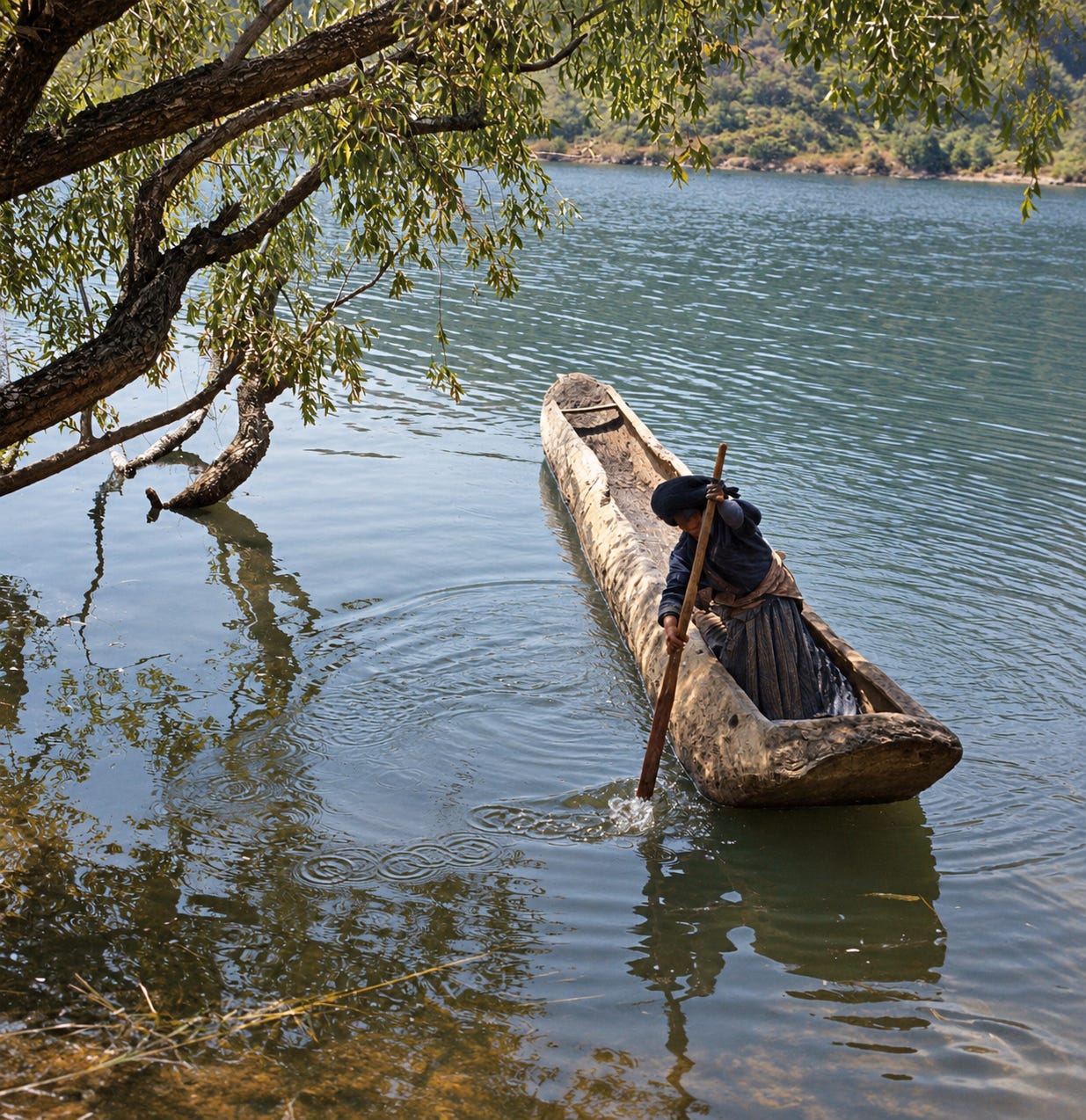
Due to time constraints, I turned back. Traveling northeastward along the sea, I reached the Xienami Peninsula, a small island about 20 meters high and about 1.5 li in circumference, inhabited by five or six households. From there, I boarded a pig-trough-shaped dugout canoe, a round log, over 10 feet long, 2 feet deep, and the same width, with semi-circular prows. It sailed very smoothly on the sea, with wooden oars.
The two [Mosuo, a matriarchal clan] women who ferried me across the river spoke of their long history of being unmarried. One woman had nine sons but no husband; the other had several daughters. The woman without daughters spoke of the world’s great emphasis on women, because a woman could obtain money and valuables from a boyfriend, which could then be used to buy mules to help her family and accumulate wealth. However, she also mentioned that many women were promiscuous, and syphilis was rampant among them.
The sea was calm after that. We traveled about twenty li to the island’s edge, took a few photos, and then landed on the west side, about thirty meters from the island. The island’s top was slightly flat, with a prayer hall below and living quarters below. To the right of the prayer hall was a pavilion with glass windows on all sides, and two side corridors with railings. Behind the prayer hall, on a slightly lower peak of a hill, was a pavilion. In front of the prayer hall were a dozen or so servants’ quarters on either side of the main gate. The island was densely wooded with some flowers, and peonies were in bloom. A ring of earthen walls surrounded the island. The island was about half a li long from north to south and two hundred feet wide from east to west.
The young lady and the wife are both named Abõ, and the chieftain’s eldest daughter is named Yotscu.
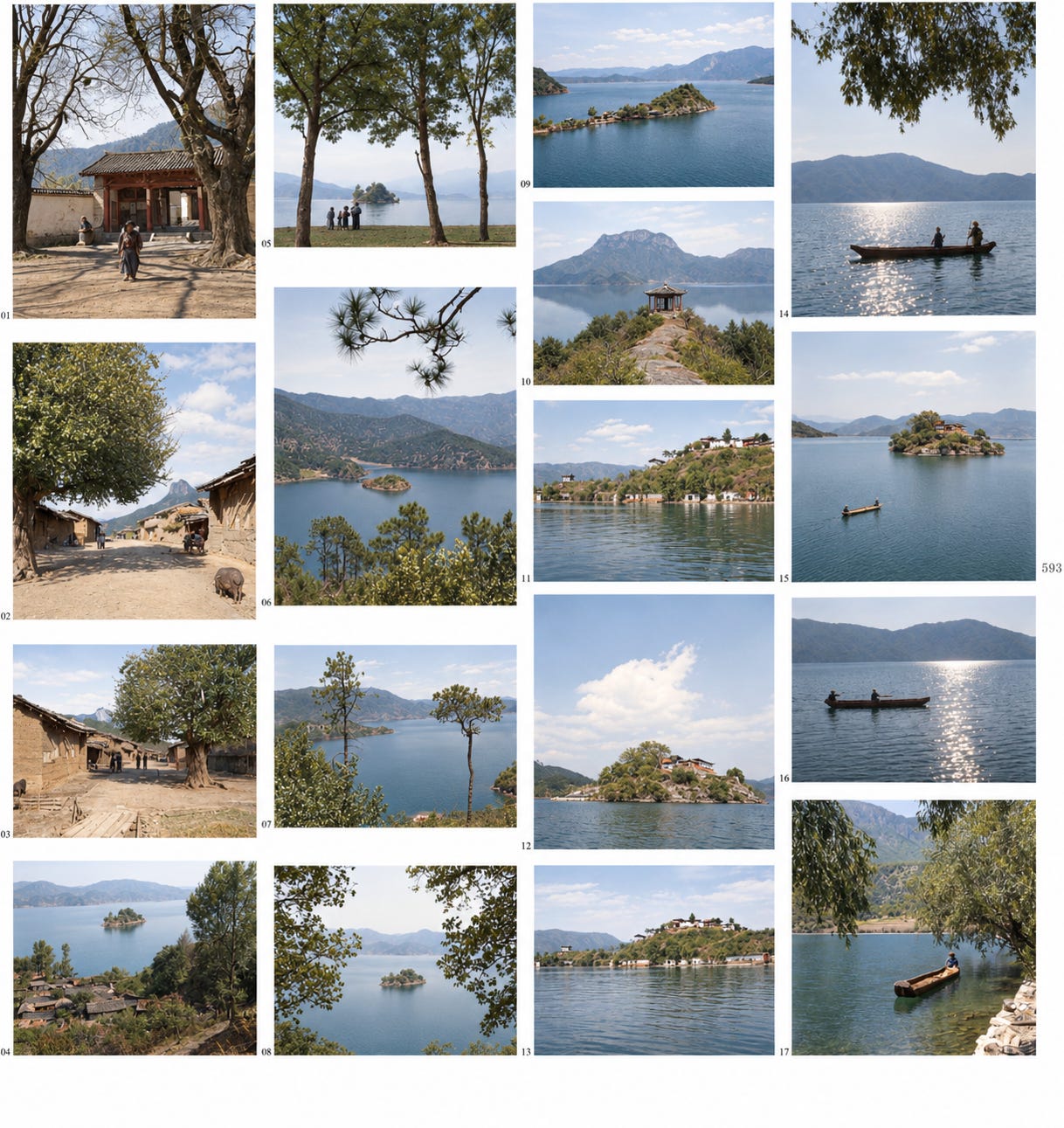
April 23rd, from the island to Zuosuo
After breakfast, we boarded a dugout canoe and headed north back to the lake. The wind and waves gradually grew stronger, making the journey north quite strenuous. We rested briefly at the Xiaolongshui coast, then changed boat women and headed east past Dazui to the Zuosuo seaside to land. We urged the muleteer to go into the mountain valley, and after about ten miles we arrived at the yamen, where the current brigade leader of Qianhu Labao District was located.
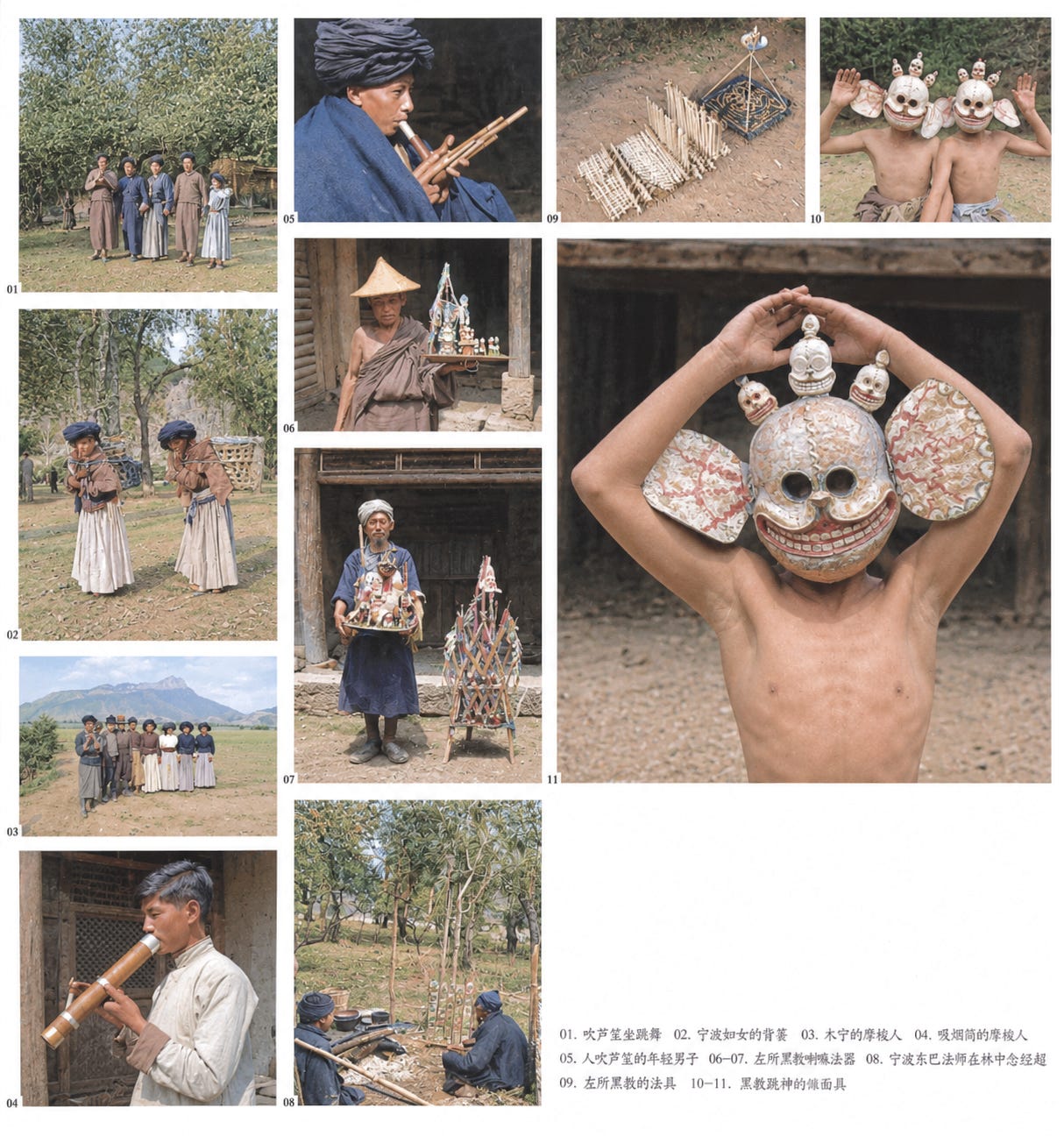
In Zuosuo, most women either marry out or are taken in by their husbands’ families; few marry freely (this is inaccurate; some say the customs are the same as in Yongning).
The only produce is corn. There are about three to four thousand households of Hu, Mi, Liu, Zhang, and Yu Yi people in Zuosuo. At funerals, people jump over pots and pans, men dressed as women and women dressed as men, their heads covered as they leap into the clouds.
April 24
Tu Qianhu: It is said that he came from Mongolia during the time of the Yuan Dynasty’s founding emperor and surrendered in the 47th year of the Kangxi Emperor’s reign.
Black Sect: Zuosuo is entirely under the Black Sect. There is a large Black Sect temple on the mountaintop, with 300 lamas. They usually return home, only coming to the temple for services during the January, April, August, and November festivals. Therefore, there are no monks’ quarters nearby. The Black Sect temple buildings are mostly square, like pavilions. Each household has a prayer hall with a Buddha statue, where the lamas chant scriptures. When performing divination, they place cloth pieces on wooden sticks, somewhat resembling the practices of foreigners.
Adulthood: When a girl is nine years old and wears a skirt, a lama is asked to chant sutras and someone is asked to tie it up for her. Intermarriage is common within the clan families of Yongning. For example, the sister of the chief steward, Ashaoyun, became the wife of the current chieftain. Furthermore, the sister of Ashaofu Kanbu became the mother of the chieftain. By custom, the chieftain was a junior to the chief steward.
The hem of a nobility’s skirt is seven or eight inches wide and is turned inside out. Nobles wear long skirts that trail on the ground, covering their feet; commoners wear skirts that are slightly higher, reaching five or six inches above the feet.
Left-side hair ornaments: The hair of the left-side is smaller, with less silk thread and cow hair mixed in, so it is not as large as that of the Yongning hair ornaments. It is said that the largest Yongning hair ornaments, made with cow hair and silk thread, weigh up to four and a half catties.
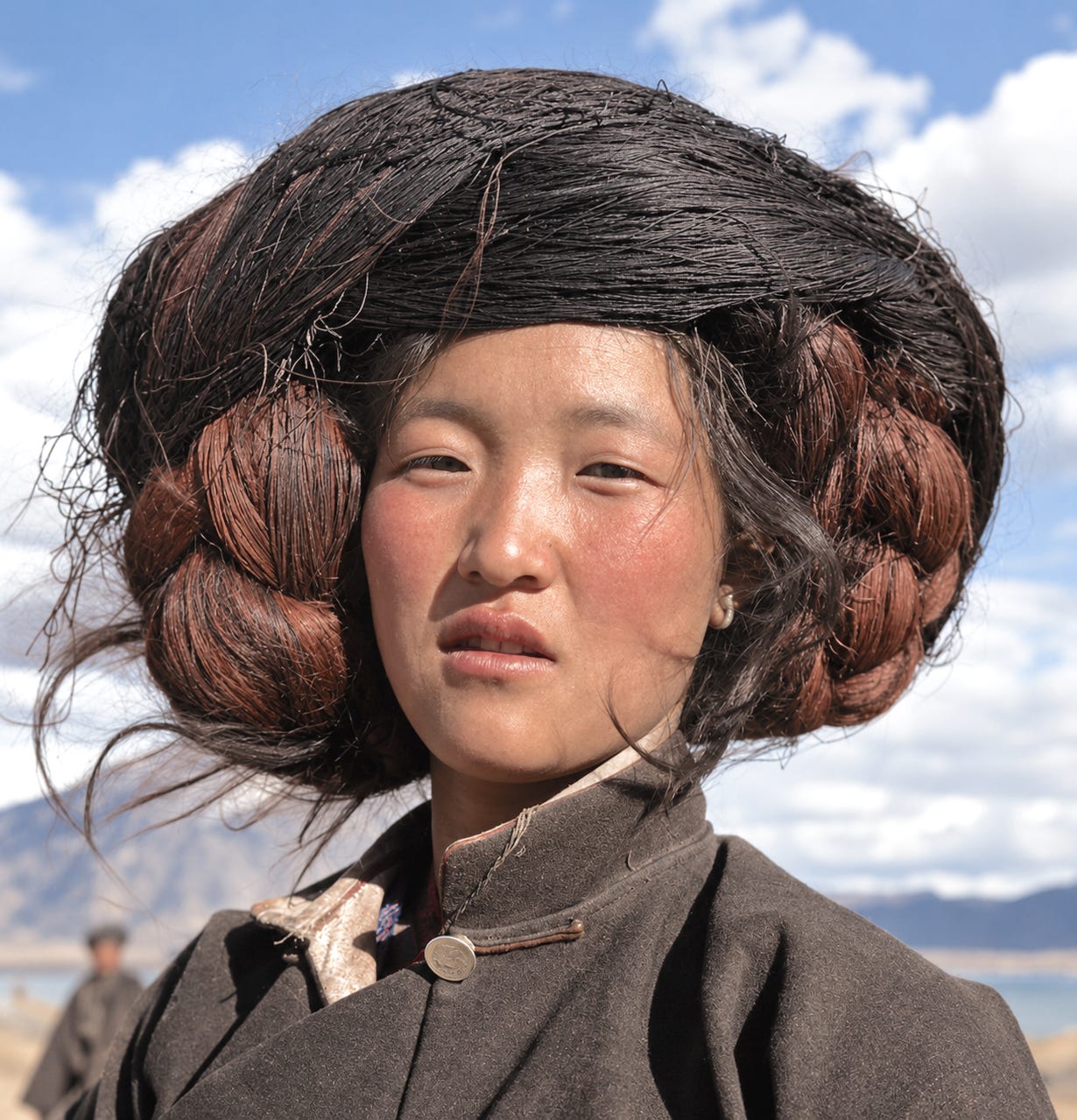
April 25
After breakfast, we set off from Zuosuo, turning west past the foot of Heijiao Temple, and after another five or six li, we reached Luwa Village. The route followed the Caohai Lake, whose waters had dried up, leaving it a marshy area where pigs, cattle, and sheep grazed. Small water chestnuts and shrimp were found in the waterways. Luwa was located in a bay by the lake, with only two or three households, whose livelihoods were fishing and farming.
From there, we boarded a dugout canoe and traveled about one li to Bowa Island. The island was only 200 meters from the northern mainland, about 20 meters high, and about 100 meters in diameter. It had a prayer hall and a hermitage, and a cave on a rocky outcrop on the north side of the island. We returned in the afternoon, climbing down the mountain to reach Zuosuo, a village about 200 meters above the ground.
The lake is named Lugu, which is said to have been given by a certain scholar and is not the original name. The original name was Zuosuo, which means “Zuosuo Lake”. It is said that Zuosuo was named Latadi.
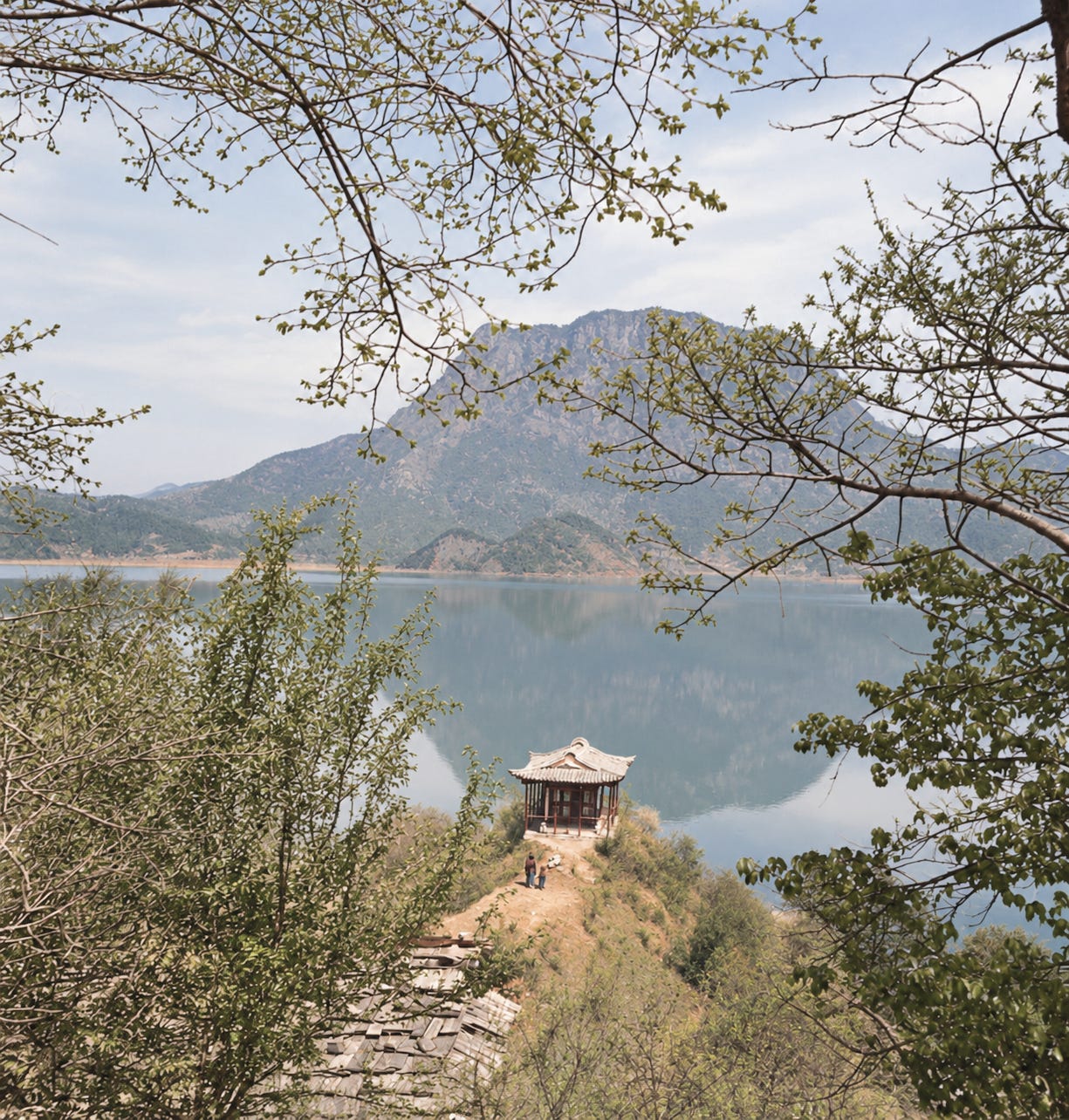
April 26th, Zuosuo—Dazui
This morning, we left Zuosuo and walked five li to the lake. We then traveled northwest along the coast for another seven or eight li to reach Dazui. Dazui is a coastal town with about forty households, belonging to Muli.
The people are all called “Naha,” supposedly former soldiers of the Mutianwang garrison in Lijiang. It was formerly part of Yongning, but later became part of Muli, thus separating it from Muli. To its east is Zuosuo, to its west is Yongning, and behind it is Qiansuo, facing the sea. The customs here are the same as those of Yongning and Zuosuo. Corn is the main crop grown here.
April 27
There are three Dongba monks in Dazui, one of whom, the one on the mountain fortress, is considered the best.
After breakfast, they were invited to transcribe scriptures. The organization of their characters, in addition to pictographs, also incorporates phonetic elements to supplement the pictographs. Furthermore, each sentence is separated by a partition, indicating the connection between each picture, making it the best reference material for the origin of writing.
Adulthood: In the first month of the lunar calendar at the age of eleven, a Dongba priest is invited to chant scriptures, and someone is asked to change into a new dress. A banquet is also held for relatives and friends. Dongba ritual implements: a bell, larger than those of the Black sect, about five inches in diameter. Dongba perform rituals by burning incense and chanting scriptures on the roof of a house. They do not have scriptures and simply recite them from memory.
The white mud handprints on the door are meant to ward off evil spirits from entering; they were made during the New Year.
April 28
From Dazui to Yongning is fifty li. Da Zui set off at dawn, heading west along the coast, passing Xiaolongshi and Lige, climbing a mountain pass with white walls and offerings, and arriving at the low-lying Lei Di. Then, crossing a mountain ridge, we reached the yamen of the new chief steward, Ashao Fu. This area is on the plain, and going up the plain leads to the Lama Temple.
In the Ju region, girls reach adulthood at the age of eleven and wear skirts on the first day of the first lunar month. Near the Yongning Tusi Yamen (local chieftain’s office), people who reached adulthood at age twelve would change into skirts on the morning of the first day of the Lunar New Year. The choice of who wore a skirt was based on their zodiac sign, regardless of gender.
April 29
Yongning is 2900 meters altitude.
Tusi [chieftain] Amengping succeeded to the position in 1931. None of the Tusi’s sisters were married. The local Longda Minli Company was established in October of the 26th year of the Republic of China and currently has four to five hundred workers.
Yongning uses General Steel Dollars and Yunnan Currency. Yongning has about 800 households and a population of about 3,000, with women making up two-thirds of the population, according to the latest survey by the district office.
Women in Yongning plow the fields. Syphilis spreads in Yongning. Due to promiscuous relationships, from the daughters of the chieftain’s family to ordinary people, everyone could satisfy their sexual desires with money. The hot spring pond in Dongshili, Yongning, was a treatment center for syphilis, and patients would go there to soak and bathe every day.
April 30
We set off at dawn, and when we passed Reshuitang (hotspring pool), the sky was overcast. Two people were bathing, and we tried to take a picture, but it didn’t work out. We changed muleteers there and went to Wulaping. We climbed the mountain to cross the Yunnan provincial border to Mulidi, then to Lijiazui, where we changed horse again. This area was all in the late autumn. We climbed the mountain again, up to 3350 meters, and descended to Wujiao, which was still in the late autumn. In the evening, we jumped into a pot to cook.
The gold-producing area is Yanzeng (grassland gold). It is three days south of Muli, commonly known as Gaoshan. The water level drops (from the sluice gate) and produces abundant gold; Muli is three days away from there.
May 1st
The summit of Xining Mountain is 4,150 meters high, and Junyi Mountain is 2,730 meters high.
Climbing Wujiao Mountain, it’s about fifty li to the ridge, where the descent is very steep. After this, the descent becomes extremely steep, and the area becomes peaceful. Crossed the river late and rested at Yi.
The annual grain tax is one qian and one fen of gold grain.
Across the river, a mountain was set ablaze. The Muli government fined each resident five eggs and a bundle of buckwheat, made them kowtow in apology, and ordered them to put out the fire.
Liao Huotou’s food list: one rope, two wooden bowls, one jin and four liang of ghee, fifty jin of pine oil, three tubes of hemp seeds (one tube of two jin), twenty tubes of buckwheat, ten tubes of round root, thirty tubes of wheat, eighty tubes of barley, one qian and one fen of gold grain, barley barley (for making paper), six bundles of mooncakes (two bundles of one jin), and roof boards. The head cook was exempt from grain rations for a year.
May 2nd Junyi to Muli
Liao Huotou said: “When the water recedes, gold is found very abundantly. Two years ago, after the sluice gate was closed, eight loads of gold were dug up. This is according to what the people who dug up said.”
Furthermore, a certain person from Junyi Village was punished by the headquarters for informing Shi Hua of Yunnan about the location of hidden gold.
Upon arriving at Muli Temple, we found that Xiang Songdian had gone on a pilgrimage around the mountain and had not yet returned, so we waited there for a while.
Lang Zhibang, the chieftain of Gubaishu, now lives near Muliliewa and has been given land by the chieftain of Muli.
May 3rd, Muli
Xiang Songdian is returning on horseback today.
In conclusion, the following points were made: 1. The strengths and weaknesses of the Yi people; 2. The weaknesses of the Yi people; 3. The reasons why the Han people were deceived; 4. The principles of governing the Yi people: (a) suppression (b) governance
May 4th, Muli
Today I took photos of Xiang Songdian at the yamen (government office).
The origin of the Yi people: According to their mythology, it should be near Liangshan in southwestern Sichuan or near the Dadu River, a border area between the Han and non-Yi peoples, hence the saying that the Yi, Han, and non-Yi peoples are all brothers. Since mythology cannot transcend its environment, it can be concluded that the claims that they came from Poyang Lake are unverifiable. The strengths of the Yi people: (1) Simple class relations. The lives of the Black and White Yi peoples were equal, and their interests were intertwined; therefore, the Han...
Humans can be assimilated into barbarians, but barbarians cannot be assimilated into Han people. This is because their intellectual development is backward, their social relations are simple, and they are more likely to perceive advantages.
May 5th Muli
The terrain of Muli resembles a lion or elephant exposing its belly to the sun, and the shape of a locked river.
Advantages of Yi people:
(a) Rapid reproduction, outside the building, marriage and separation, no widows or widows.
(ii) Strong unity and deep-rooted traditional racial concepts. Due to the simplicity of class relations and the obvious conflict of interests, enemies often formed.
(iii) They do not waste their lives, because they are simple and can live a simple life. They can get by easily and use their savings to purchase weapons for self-defense and invasion.
(iv) Recognizing the power of the people, the Black Yi were officials, and the White Yi were the people. The White Yi represented their property and military strength. Therefore, when the White Yi were humiliated, the Black Yi were willing to fight to the death and provide relief to their people. Furthermore, they widely employed the people without being harsh, treating them like their own children, thus making them useful to the government.
Although the Yi people engage in promiscuous sex, they do not suffer from sexually transmitted diseases: this is because promiscuity is allowed within the same social class but is strictly prohibited outside the tribe, thus preventing the introduction of pathogens, unlike the situation in the Yongning area.
May 6
Muli 2870, cross the bridge 30 li to Tianshi, 2430.
The tenants here bring 120 catties of pig feed and 6.5 dan of corn.
The Muli River is rich in gold, and gold mines are visible. The inhabitants of this area have beehives built into their walls.
Twenty li up the mountain, at an altitude of 3150 meters, a two-li slope, at an altitude of 3050 meters, all five households live there. Fifteen li up the mountain, at an altitude of 3370 meters. Reaching Keba, it is already dark, at an altitude of 3050 meters. At the head of the firehouse, fires are lit.
May 7
Twenty li of Xiangwei, 2730, eight families of Xifan, one family of Jiami, one family of Miao, and two families of Han. The river is three or four meters wide, thirty li of Allidi, on the mountaintop, at an altitude of 3370 meters. Ten li further on is Aboheidi Village, at an altitude of 3500 meters, with a total of nineteen families, two of which are Moshe, and the rest are small Xifan. Some of the women here are married, while others stay at home looking for partners.
Yesterday and today I encountered two drunken lamas. Today’s one was a member of the Khurul group, completely drunk and staggering on his horse. When the rest of us passed by, he blocked our way with his horse, acting extremely arrogantly. It is said that Khuruls are often like this, the Muli people said.
May 8th, Ablidi—Kulu
When it rains, we climb the mountain. The forest is dense and the slope is steep. After about 20 li, we reach the ridge. Go east along the ridge and the slope becomes gentle. After crossing a small slope, you will reach the valley.
Kulu Temple is located in the valley where three rivers meet. It is said that there are 500 monks there. There is also a nun here. There are currently three families in the Bal-ya clan: one is Lord Bal, one is the maternal family of the current Lord Bal, and the other is the current Zhang Daji family, known as Gucha Daji. The third family, from Waerzhai, is now extinct and named Köblă. Gucha (jăngăn) is the name of Lord Bal, and Lord Bal’s name is Jănyăn.
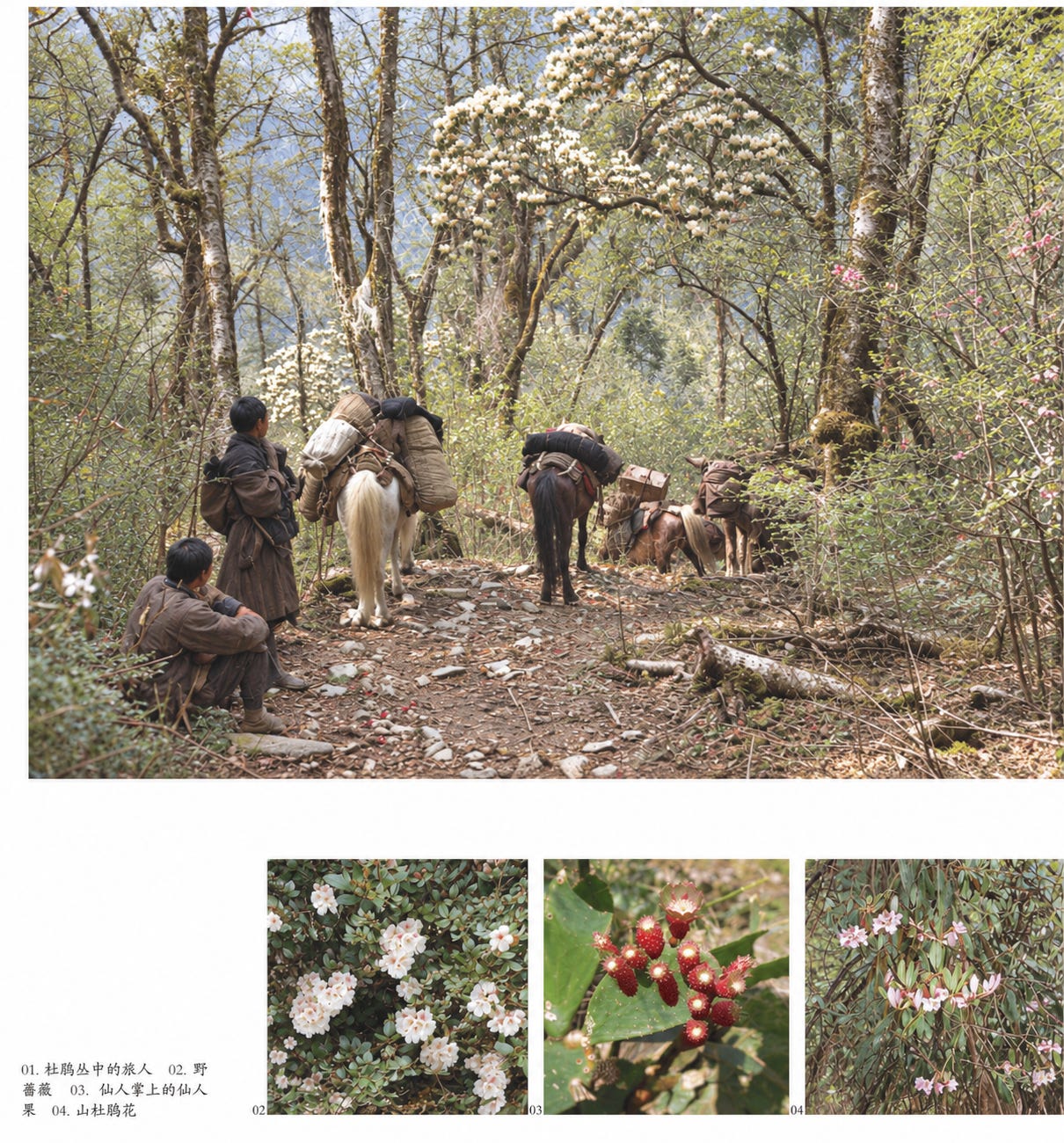
May 9
Kulu is 3650 meters altitude, the mountain peak, 4200 meters. Below, it descends into a valley, the Gold Valley, where gold is found.
The Bal chief’s office was nestled in the woods on a hillside, with several fierce barbarian dogs guarding the gate. The guest room was next to the main building. An old man, the interpreter, came to inquire first. I requested an audience with Lord Bal. He returned after a long while, saying that Bal did not understand Chinese and there was nothing to discuss. I said this was proper etiquette, and went inside to report my request. I then prepared the necessary formalities and went to see him.
In a dimly lit room on the left, which was also at dusk, I saw what appeared to be a Buddha statue at the head of the room, which was still clean. A few words were translated by the interpreter, and then he withdrew. I learned that the interpreter was Lord Bal’s father; the previous interpreter was originally a minor barbarian from Niuchang, who later married his daughter to him, becoming his aunt. There are two houses at the bottom of the slope, which are said to be used for Mrs. Ba’er’s childbirth and postpartum care.
May 10, Balti 3330 meters, 13 degrees C.
Went to the Empress’s house. The Empress had only one son, and the Master and his two daughters came to find another young Pumi Tibetan to be their son-in-law. The birth house (Hănchū) means “accompanying house.” The Bar family would bring their newborn to this house immediately after delivery, and the baby would only enter the government office after the baby was a month old. These two houses provided bathing services and breast milk for the baby, as well as food and lodging for the new mother.
Lord Bal (the son of the bride) was married to the daughter of the former master’s father-in-law. Bal had more than two or three hundred tenant households and twenty or thirty aunt households. Ake is now at the Empress’s house. Another son of Aku, who married Gucha Daji.
May 11
Twenty li downhill to Baidiao, where there are more than twenty households of Han Chinese, Xiaoxifan [Pumi], Bo Yi (Buyi), and Miao people, at an altitude of 2230 meters. Three li downhill to the Jinhe River, at an altitude of 2030 meters.
At the ferry crossing, there are two pig-trough boats combined into one, and a wooden boat that is leaking and cannot move. There are double ropeways across the river. At that time, the river was about seventy meters wide, and the current was calm. In summer, when the water rises, it is said that boats cannot travel, and only the ropeways can be used.
The white watchtower urged the men to blow on ox horns and burn smoke to signal the dispatch to the opposite bank. One pile of smoke represented two animals, two piles four, three piles six, reminiscent of ancient beacon fire signals, reminiscent of the beacon towers used by King You of Zhou to amuse his feudal lords at Mount Li.
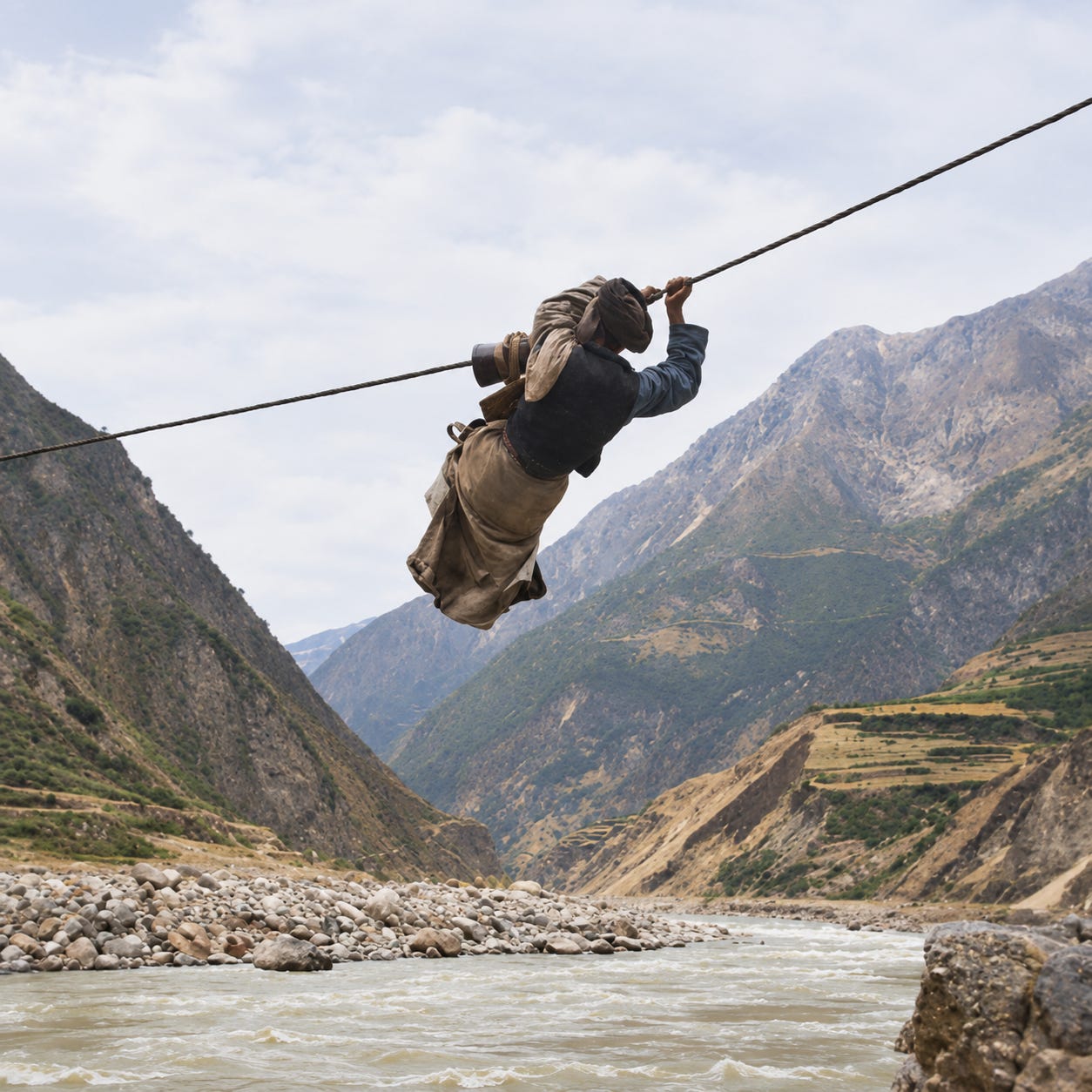
After crossing the river, we waited a long time because a local deity was on the mountain. Suddenly, a torrential rain and hailstorm struck, and the wind on the river was extremely strong. We sat for about an hour until the rain subsided and the men and horses arrived, then we went uphill again.
Ten li later, we reached the Triangle Pass, 2700 meters high, where five families of men, belonging to the Bo Yi ethnic group, lived. The Bo Yi had been there for six or seven generations, their clothing consisting of skirts and trousers, practicing burial, and having already begun intermarrying with other ethnic groups, their customs resembling those of the Han people, and they used cooking pots.
May 12th, Sanjiaoya-Wali
The journey begins at Sanjiaoya, a 20-li ascent to the summit. The path winds through a pine forest where a field of pine trees can be found. The descent is extremely steep, and the valley lies on the riverbank.
Wali gold mine currently has seventy managers and five to six hundred miners. The average monthly gold yield is thirty to forty taels in a slow month and fifty to sixty taels in a peak month. The old street is at the west end, with about one hundred households; the new street is at the east end, with about one hundred households on the slope. The local currency is silver dollars, worth sixteen strings of cash. Nearby is the Mutianwang Watchtower, an octagonal watchtower.
It was established in Wali in the 25th year of the Guangxu Emperor’s reign and was extremely prosperous.
May 13th
The altitude of the canyon is 2,120 meters.
Gold has been found in the grass gully behind the offices. Currently, fifty or sixty people are digging for it, making money every day. Several holes are yielding particularly good gold, and they are quite deep. It takes more than a thousand steps, mostly by entering at an angle.
The Yi people living near Wali are the Midada and Hu families. The monthly allowance for Muli Chai Shan is twenty taels of silver, and the annual allowance for Gua Bie is four taels and five mace of gold.
There are several caves with gold flakes resembling straw sandals under the rocks, and clusters of them. After a flood, gold nuggets weighing several ounces often wash down from the mountain; last year, a nugget weighing more than three ounces was found. There was a cave that produced too much gold, yielding fifty or sixty taels a day. The manager lit incense and candles and told the cave not to produce any more.
The local people are belligerent and often fight over trivial matters.
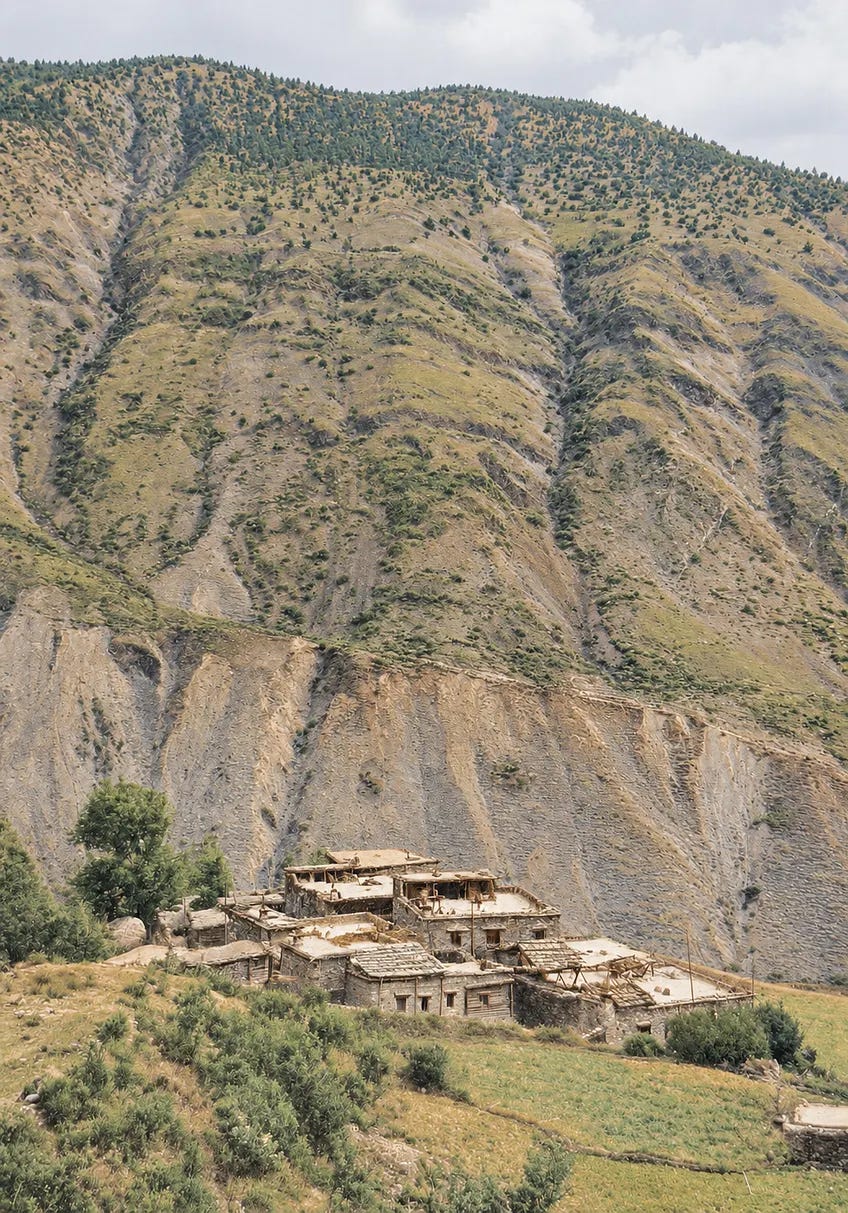
May 14
Wali is 2140 meters altitude; Dujia Village is 2720 meters. After breakfast, the master arrived at noon. Halfway up the mountain, suddenly caught in a thunderstorm, and clothes soaked.
May 15th
Fifteen li ferry crossing, 1920 meters, seven boatmen’s families in total. Two li Baichou, twenty-five li Abaidiao. 2750 meters.
We got up early and went down the mountain, crossed the river at the ferry, and headed to Baidiao. After breakfast, we set off again, but it rained. We arrived at Baidiao early; there were three households living there.
The Baidiao village has a family called “Boluozi Family,” which consists of three families. They have been assimilated into Tibetan culture and do not know the local language. They now speak Tibetan. The three generations of the family came here, saying that they fought with the Gami people and were defeated, so they came here. There is also a family in Zhongjiao here; their women’s skirts are even shorter than those of the Miao people. They speak Miao and eat unclean things and breed many monkeys. The Bo people here also have intermarriages with the Western Barbarians and the Moshikai people, and the men also become monks. Many women in the evening were also unmarried.
There are six families living in Baidiao, who are tenant farmers. This area is known by various names such as red soil grain and sand grain.
In this area, when a daughter marries off or marries into another family, people are sometimes exchanged. If the host family has two sons and two daughters, then two daughters are exchanged for two daughters-in-law, and only a banquet is held; otherwise, cattle or horses are exchanged for people.
May 16th, Abai Fortress
The rain doesn’t come in.
Zhang Daji was originally from Minji’s ancestral home in Molash (Litang). He was a lama and first became friends with the goddess. The marriage was arranged with the permission of Minji. Jika came from Zhangmuqing, practiced cremation, and did not become a lama.
Here, thirteen-year-olds wear skirts, which are put on by their mothers. Boys also wear trousers at thirteen. When jumping to a [food] pot to beg for a taste, they kneel and suckle, and there is a scene where two people slap their feet.
May 17th
Lama Awang Losang and his wife, a jaka, did not return home all night. When a lawsuit is brought to the yamen, each party pays one tael of silver and a hada (a ceremonial scarf).
Because of the heavy rain that lasted all day and night, we will stay another day.
May 18
Abaidiao 2730m
After the rain, many fungi appeared on the trees. After two days of heavy rain, the snow on the mountaintop was two feet deep, reaching up to the horses’ shins, making the journey extremely difficult and cold. The trek continued until evening before they finally reached the summit. It was already dark in Dakulu.
Lamas with a strong addiction to snuff smoked three catties of snuff leaves per month, which were made by adding a little white clay (alkaline).
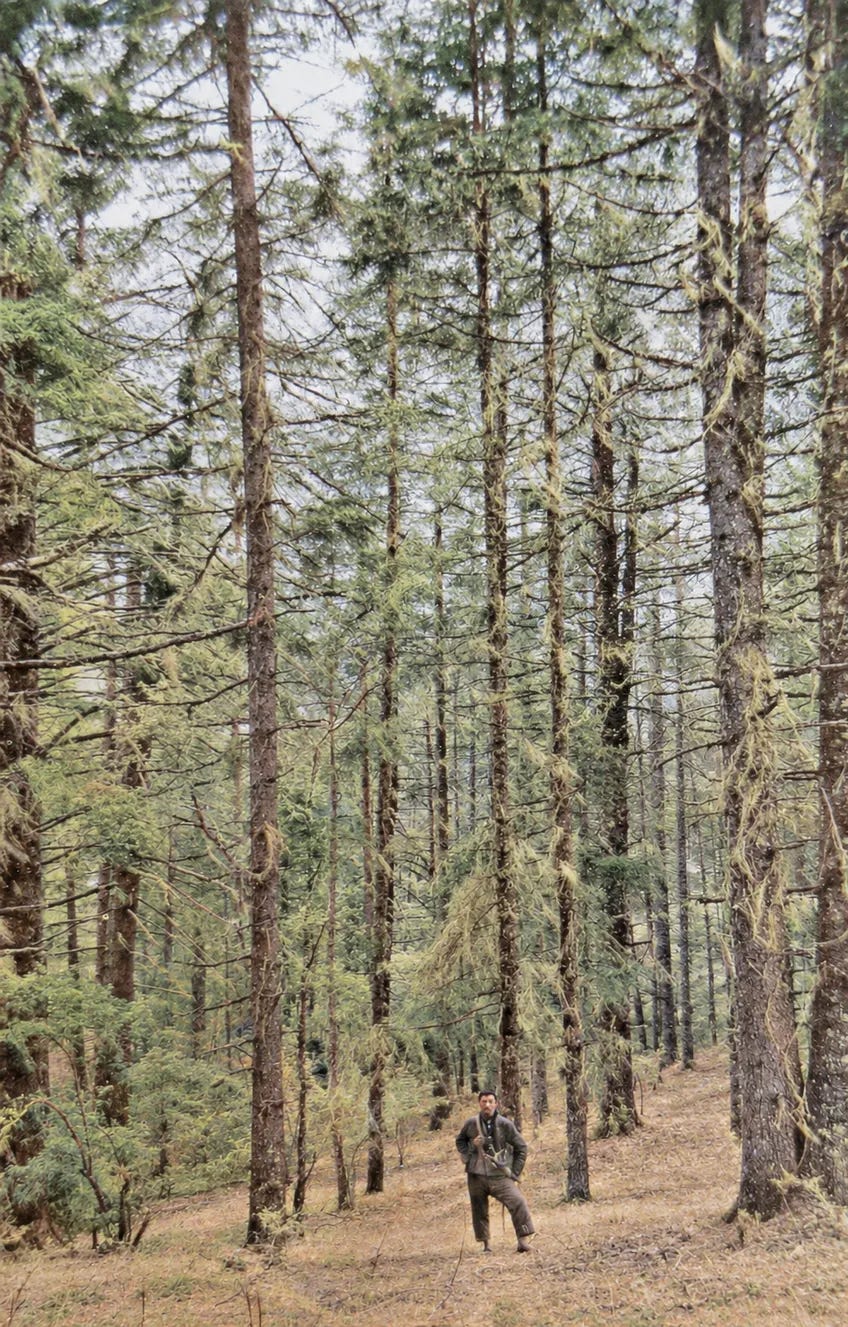
May 19, Kulu 3700m
The Muli Yi people number approximately three thousand households (according to Luo Sangyan).
May 20th, Khuru-Zani
We set off early in the morning, climbing the mountain in front of the small prayer hall opposite.
Beyond the mountain was a meadow with a cattle pasture of one or two hundred yaks, owned by Kulu monastery. From there, about thirty li west, was a large lake, about several li away. Kulu has pilgrims who come here to circumambulate the temple.
A group of Tibetan merchants, the Molash people, were among them. Because they entered without proper documentation, Kulu detained them, along with several dozen of their livestock. After inquiring at the temple, we learned they would be released today and could continue their journey.
We descended the mountain, crossing a small river flowing eastward, then north into a ravine, which was a salt marshland with six or seven households. From there, the ravine stretched very deep and long. At the end of the ravine, we climbed a mountain, where several dense forests grew. After descending for a long time, we reached Zani, where there was a temple.
[Note: this part of the eastward journey from Muli to Jiulong covers the same route across the massive Yalong river canyon described by Joseph Rock as described in a previous article]
May 21
We set off early from Zani. There were four Lolo (Yi) families and one Pumi Tibetan family in the area. The master was entirely Lolo, and he was very docile on the journey. Good, they are now obedient citizens. This area is inhabited by Bai Yi people, who were previously brought here by Luo Bo.
Luobo is located in the eastern border of Kulu, bordering Mianning, in the Muli area, where many Yi people live. From Zani we set off, winding our way up the mountain, encountering rain along the way, clothes becoming completely soaked. Descending over Zani Mountain, we continued north, the slope slightly turning right, leading to Zhahong.
There were four or five Western Yi families there, and one Luodian family. The women of this area all wore melon-shaped hats, large earrings, and their hair was adorned with satin braids of cow hair, decorated with red and green beads; they were said to wear skirts at the age of thirteen.
Starting from Zhahong, we climbed another mountain (to the summit of Nuowa Mountain). The slope was not very steep, but a large fire had made the path extremely narrow and treacherous, and the soil was very loose. The pine forest here was very dense, and although the trees were not very old, they were clustered together. We descended the slope and crossed the ravine to reach Jixu. There were two forts here, with about seven or eight households of the Western Barbarian (Pumi Tibetan) tribe.
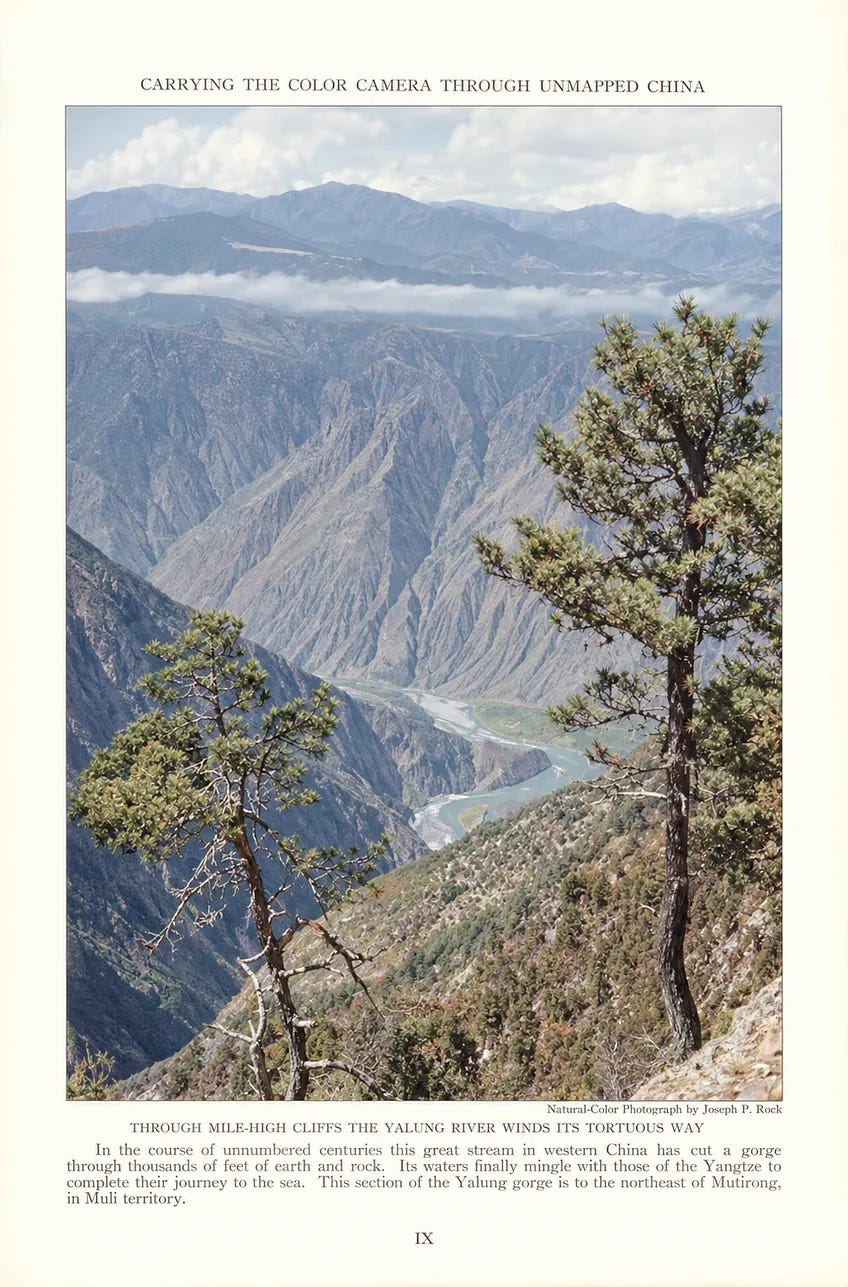
May 22 [Yalong river canyon]
At the top of the fifteen-mile mountain, 3750m; down the side of the canyon, winding for ten miles, Ertu 3710, with the mountain Modigongga (Muti Konka or Maidi Gangga) visible on the opposite bank. Descending the steep ten-mile slope is very dangerous, with two Han Chinese households on the halfway point, at an altitude of 2920 meters (Gaimo).
Set off to climb the back mountain. The path was slightly steep, and upon reaching the ridge, the white walls of the Wadu Small Scripture Hall [temple] could be seen through the shade of the trees. Descending the slope, wild hibiscus flowers bloomed in profusion, turning the entire hillside pink; being there felt like being in a large park. After descending to a lawn, another ridge led to the white walls of the temple.
Several lamas came to greet us and led us into the government office. This was the scripture hall at the border of Kulumu Village, thus it was under the rotating jurisdiction of the two monasteries, each sending an official to manage it for three years; this year it was Kulumu’s jurisdiction, and the official had only been there for three months. There were about forty lamas and several hundred households of commoners.
After breakfast at the temple, we set off again. The path wound its way downhill, past a cluster of wildflowers lining a ravine, and across a ridge to Ertu, where we changed muleteers. There were two Western Tibetan households here, and several others that had been abandoned, leaving only crumbling walls standing on the slope.
From here, we could see the snow-capped peaks of Modigongga across the river, though they were hidden in clouds. The descent was very steep, and the Dajin [Yalong?] River was visible below. About ten li later, we reached the halfway point, where two Han Chinese households were located. It was still early, and we feared we hadn’t been notified before crossing the zipline; there was no one on the other side, so we rested.
May 23
Today, I planned to cross the narrow passage via the zipline, but the treacherous conditions I had heard about made me uneasy. Descending the slope at dawn, as I approached the riverbank, I saw a large group of Yunnan merchants with fifty or sixty mules and horses already waiting there. Two bamboo cables, one higher than the other, stretched across the river, about one hundred meters wide, with the current swift and rapid.
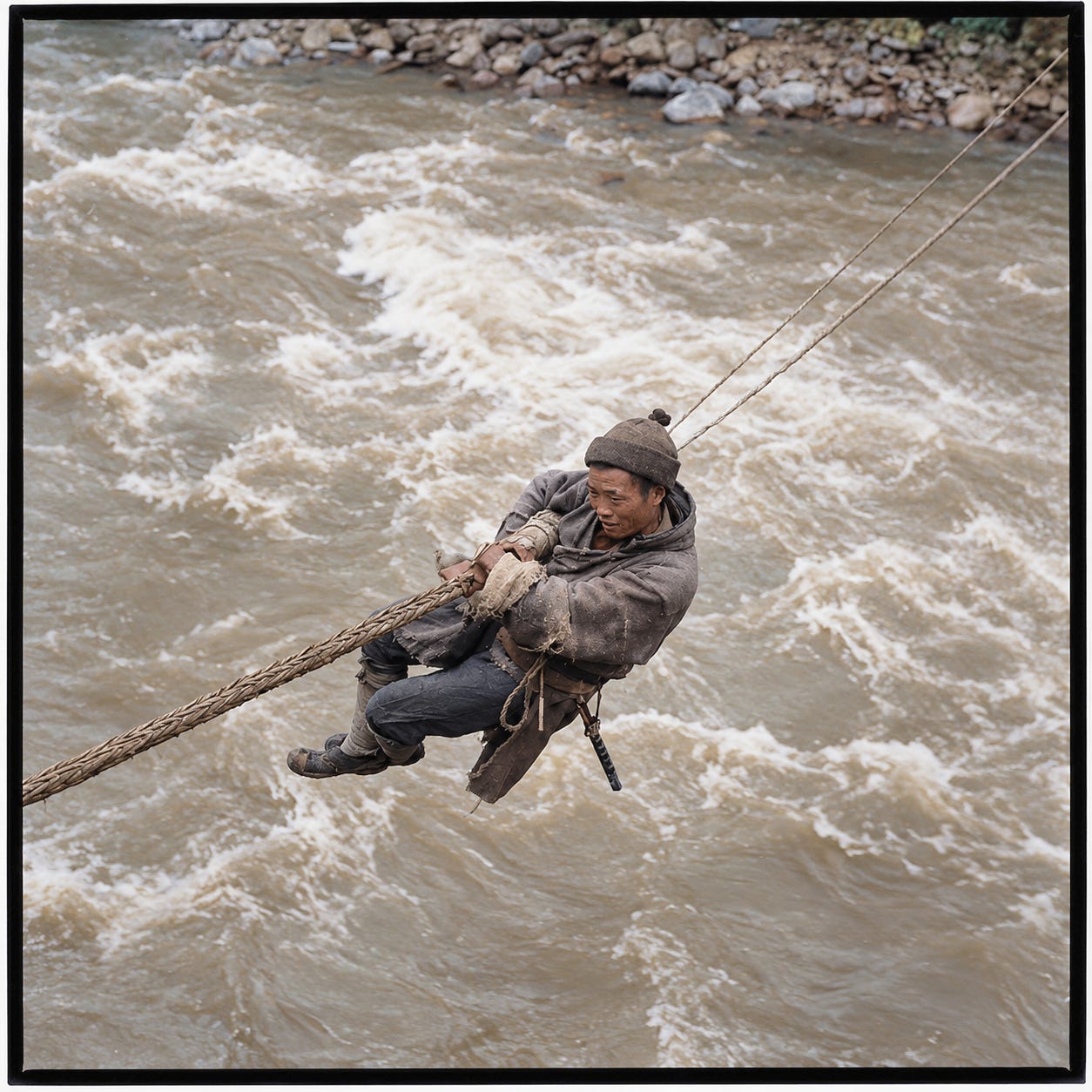
The sun was just rising above the mountain peaks, and the zipline supervisors had not yet arrived, so I sat down briefly by the bamboo cables. I chatted with some Lijiang merchants who told me they traveled from Lijiang to Lucheng and then to Lhasa, and back again, doing business in these three locations throughout the year. They said the journey from Lucheng to Lhasa took fifty days, from Lhasa to Lijiang sixty days, and from Lijiang to Lucheng forty days.
The porters would first put the luggage onto the zipline, and then one porter would slide down the zipline while the luggage remained attached to it.
In less than half a minute, we reached the other side, and with a slight climb, we were ashore. The porters then slid back via another zipline to retrieve the zipline frame. Their movements were swift; three or four people made this round trip in half an hour, and the luggage was all transported. I then wrapped my cotton coat around my waist, placed a bundle under my legs, and secured it with hemp rope. I took one more step on the zipline and reached the edge of the rock. The wooden frame was already slippery, and looking down at the swift current, which was about a hundred feet deep, my heart pounded. I let go, gasped, and gasped for breath. I was already halfway up the river when the current slowed down, and I felt as if I were sitting on a pulley, finding the gliding quite enjoyable. Upon reaching the shore, the others helped me up, and with a few more climbs, I reached the bank. Looking back, I felt dizzy.
About three li from Modi Longjiang, we rested there, changed porters, and the area belonged to the Mingzheng Tusi (chieftain).
May 24
The lama distributed two silver dollars to each village, four bundles of grain (two bundles of horse feed, one bundle of tsampa, and one bundle of corn), and one chicken. Gold was found in the “Zangbi” high mountain behind Wadu Mountain. The upper village was twenty li (fields reduced), with 2890 households. The three villages of Modilong (Maidilong), upper, middle, and lower, each had eighteen households.
[Author] fell from horse, injuring back, and waist struck a boulder.
Origin of the Western Barbarians (Pumi Tibetans): The Western Barbarians and the Han Chinese were brothers. The Western Barbarians were simple-minded, while the younger brother was extremely clever. When they divided their property, the elder brother tied a three-pronged piece of firewood on the ground, and the younger brother placed a stone on the ground. Later, a fire broke out, burning the firewood, but the stone remained, thus becoming the younger brother’s land. Therefore, the younger brother lived on flat land, while the elder brother lived on a high mountain. Later, the brothers went to retrieve Buddhist scriptures from the water. There was a large fish in the water, its back exposed above the surface. The elder brother stepped on the fish’s back to retrieve it, while the younger brother placed it on his head to retrieve the scriptures. However, the fish shook, and the scriptures fell into the water and were swallowed by the fish. This is why later Han Chinese monks struck a wooden fish to spit out scriptures, leading to the saying “true scriptures, false monks” and “false scriptures, true monks.”
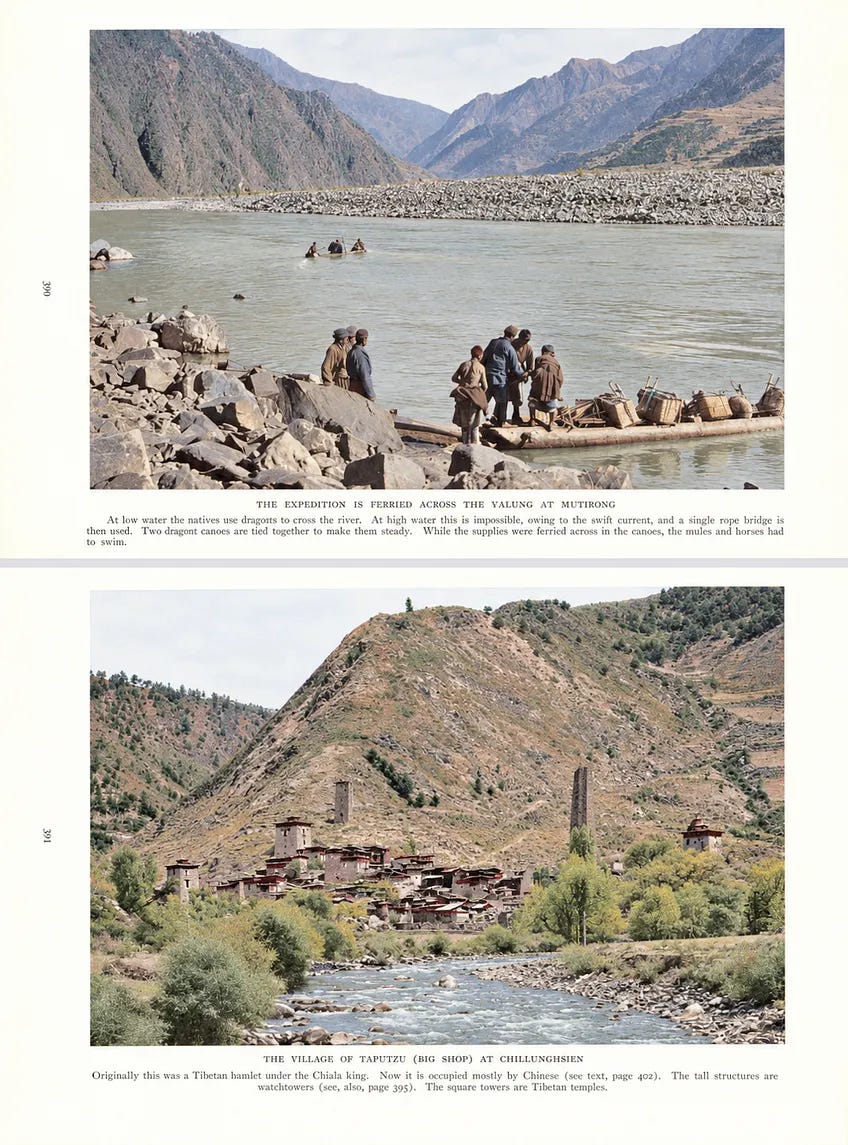
May 25
At the summit of Fifty Li Mountain, the altitude is 4750 meters; at Mengdong, the altitude is 3910 meters.
The night rain had just stopped, and the mountains were shrouded in mist. After morning tea, we set off up the mountain, climbing a steep slope through the fog, which was quite slippery. After about twenty li to brew tea, we continued climbing, with the bright Maidi Gongga Mountain shining through the trees across the mountain. After about fifty li, we reached the ridge, which was covered in gravel and overgrown grass, and remained so after crossing the slope. We lingered for another twenty li to reach Xiaozhuang, also known as Mengdong. It originally had five households, but now only three remain. There was a small temple in the middle, belonging to the Black Sect. The local people are from the Western Regions (Pumi).
Twenty li above Modilong, Yangfanggou is the border between Muli and Jiulong.
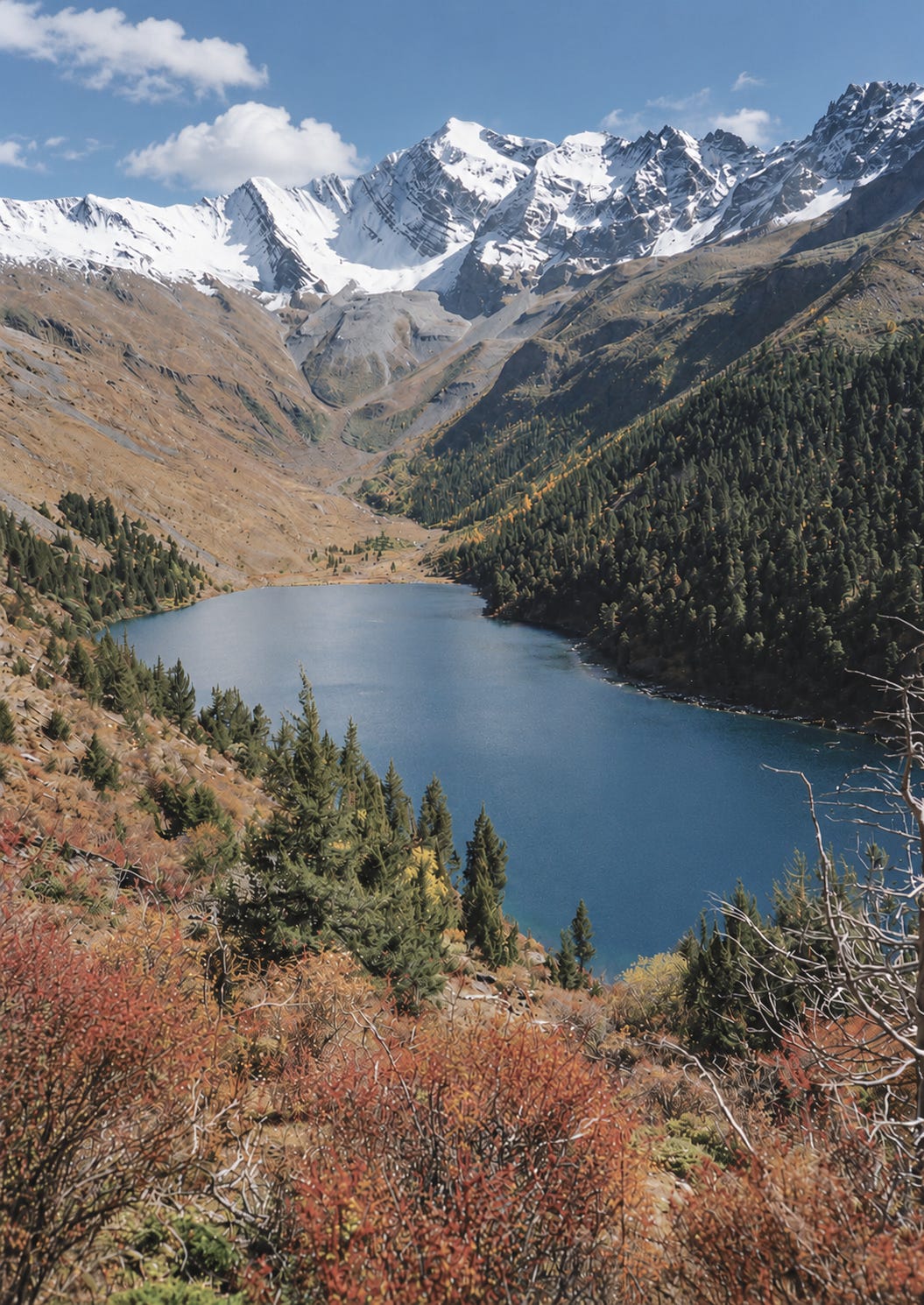
May 26
Downhill for 20 li, 2950 meters, Sanyagou Village, five houses in the west; 3 shops for 10 li, 2820 meters.
Meng Dong: got up early and went downhill, turning north for twenty li to Sanyagou for breakfast. There were six households there, and corn was growing by the river. After crossing a mountain ridge, we arrived at Sanyanlong Gully, and after crossing a bridge, reached Sandian. Waited for food there and rested at Sanyanlong. The valley was about a li wide, with steep banks and bamboo shoots growing on the mountains.
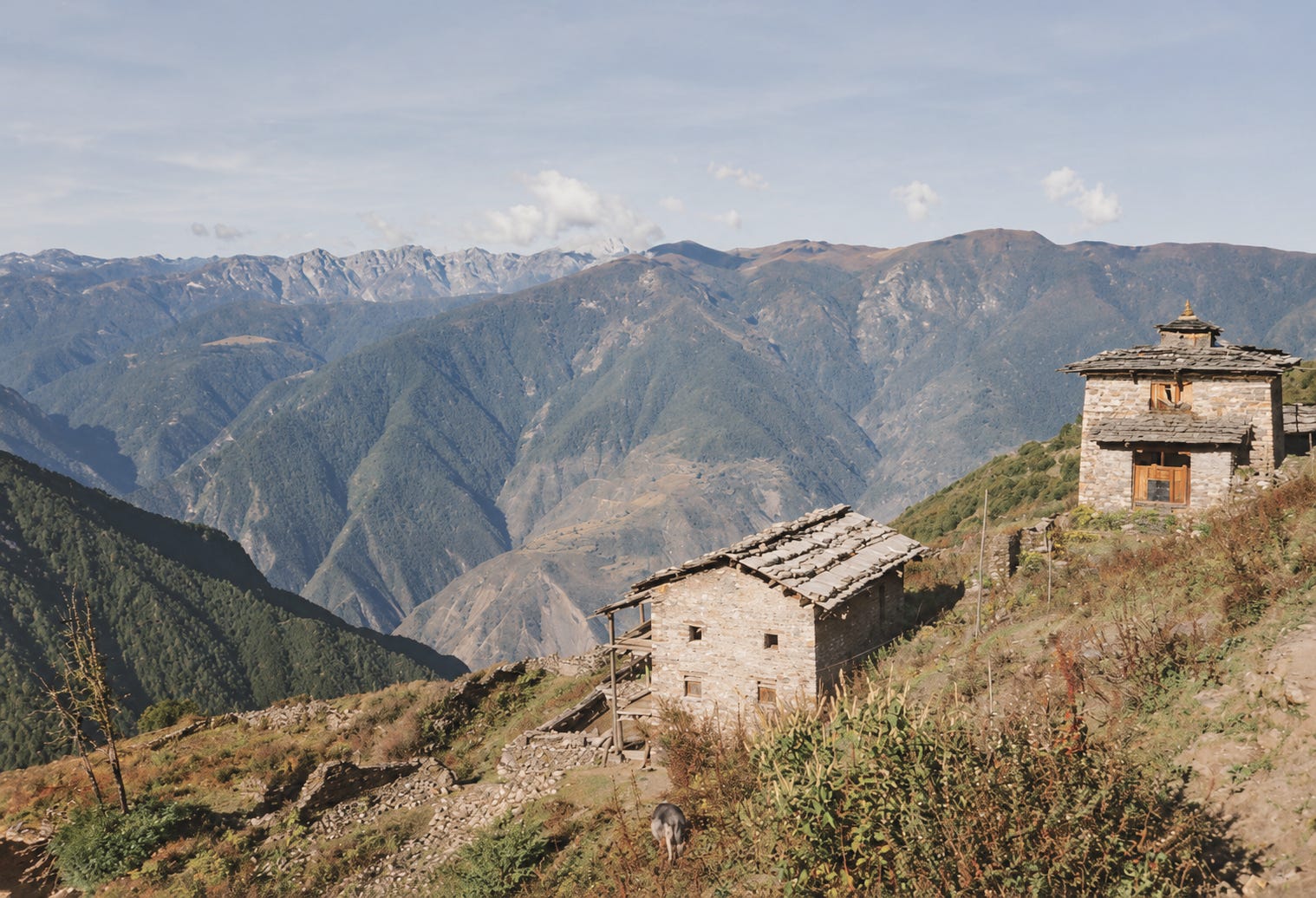
May 27
Benpo Village, 2950m - Shigen - Xilin Lama Temple, 3630m.
Following the gully upstream for twenty li, one reaches Benpo Village, and another twenty li to Shigen for a meal. Another twenty li leads to the Lama Temple, now destroyed. It consisted of four or five buildings, reportedly abandoned after thieves stole bodhisattvas and ritual implements. A new temple is being built on the mountain, but it is not yet completed. There are more than ten lamas living here, belonging to the Sakya school.
Monkeys, cordyceps, and animals such as roe deer inhabit this valley. The resting lodge was occupied by a hunter, consisting of only a woman and two young children. While the rest of us were eating, a chicken leg and a duck leg were stolen from our bag, and the next morning, a small amount of food belonging to Urawa and his companion was also stolen.
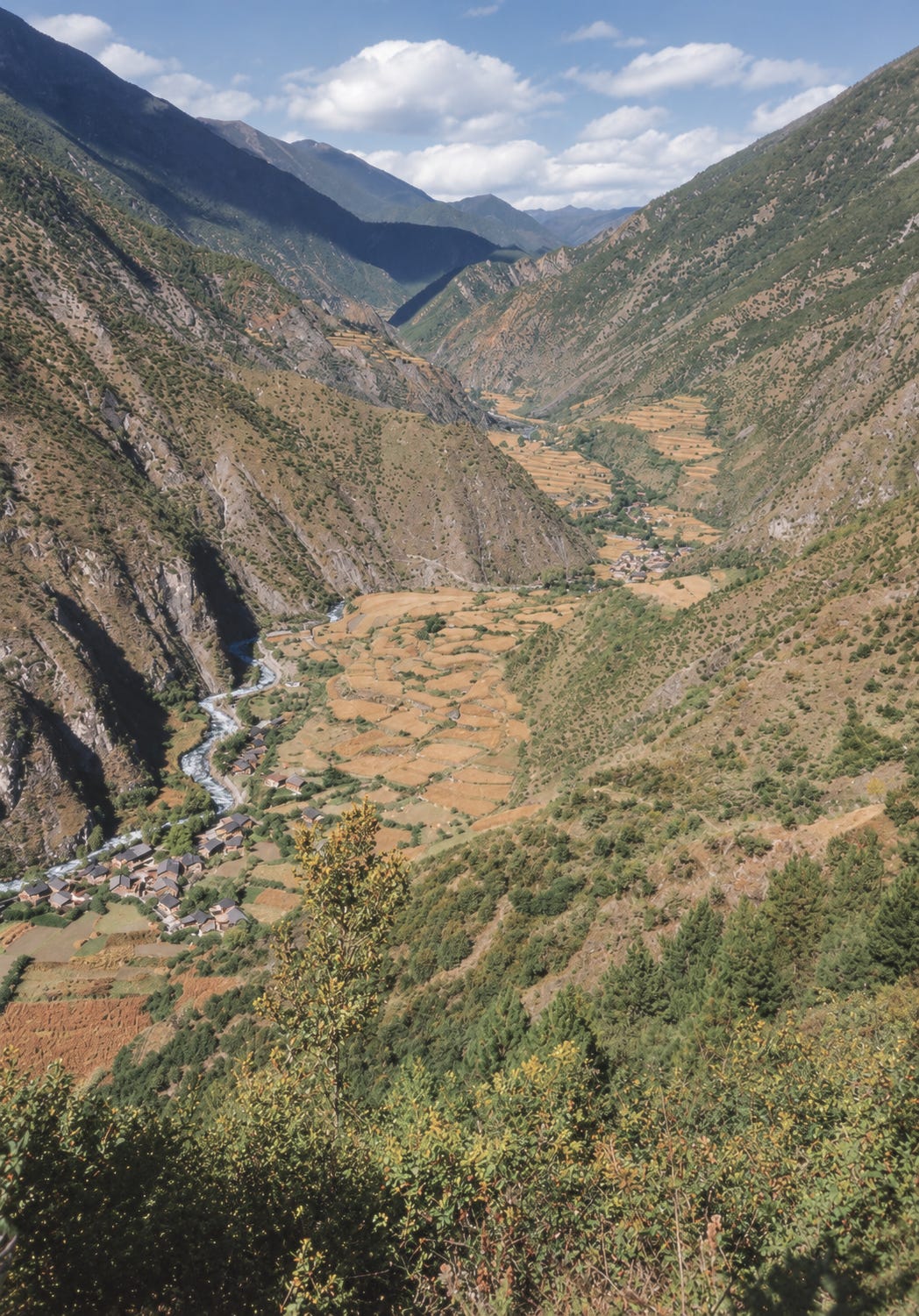
May 28th, Lama Temple to Haqu
Entering the valley from the Lama Temple, after about ten li past a cattle ranch, turn right into the valley and climb the mountain, the slope of which is very steep.
At the top of the mountain, there is a pile of hemp. Cordyceps grows on the mountain. I dug it up and found ten roots, but I never found the rest. The tips of the grass are blackish-red, half an inch above the soil, and the roots are an inch deep, below which are the roots of the insects (the so-called insects still moving is a mistake), already dead. The downhill slope was quite long, about thirty-five li before entering the valley. Then we climbed another mountain ridge, and down the slope was a Sakya Monastery, where people were performing a ritual for local people.
[Note: The journal extract ends as the author approaches Jiulong town.]
[Note: Images are colourised by AI and tweaked by me for saturation etc]


